Family Entertainment Center Franchises: Opportunities, Costs, and Tips for Success

Key takeaways
- A franchise gives you a proven brand and operational playbook, but you'll pay franchise fees and ongoing royalties and have less control over how you run things.
- Going independent gives you full creative control and no royalties, but you'll need to build your brand, systems, and customer base from scratch.
- Location, staffing, and delivering a consistent guest experience are the biggest day-to-day challenges regardless of which path you choose.
- Startup costs range from around $450,000 for a smaller concept to $10 million or more for a large multi-attraction destination.
Family entertainment centers, or FECs, have become a staple in many communities, combining attractions, food, events, and experiences that keep people coming back. With demand driven by birthday parties, group outings, and year-round indoor entertainment, more entrepreneurs are exploring the space.
A family entertainment center franchise is one way to get started, offering a proven model and ongoing support. Independent ownership is another, giving operators more control over branding, design, and long-term direction.
In this guide, we take a clear look at how FEC franchising works, what it costs, and how it compares to going independent, to help you decide which path is best for you.
What is a family entertainment center franchise?
A family entertainment center (FEC) franchise is a business model where you operate a multi-attraction entertainment venue under an established brand, using the franchisor’s concept, systems, and operational standards. As the franchisee, you manage the day-to-day operations while paying a franchise fee and ongoing royalties in exchange for brand access and support.
In a franchise model, the franchisor provides a proven concept, brand standards, and operating systems, while the franchisee owns and runs the location locally. In practice, this usually means the franchisee agrees to:
- Use the franchisor’s branding, signage, and guest experience standards
- Follow a defined layout or attraction mix, with some room for local variation
- Operate using approved vendors, equipment, and software
- Pay an upfront franchise fee and ongoing royalties
Most FEC franchises are built around a combination of attractions designed to appeal to families, groups, and repeat visitors. While the exact mix varies by brand, common attraction types found in family entertainment centers include:
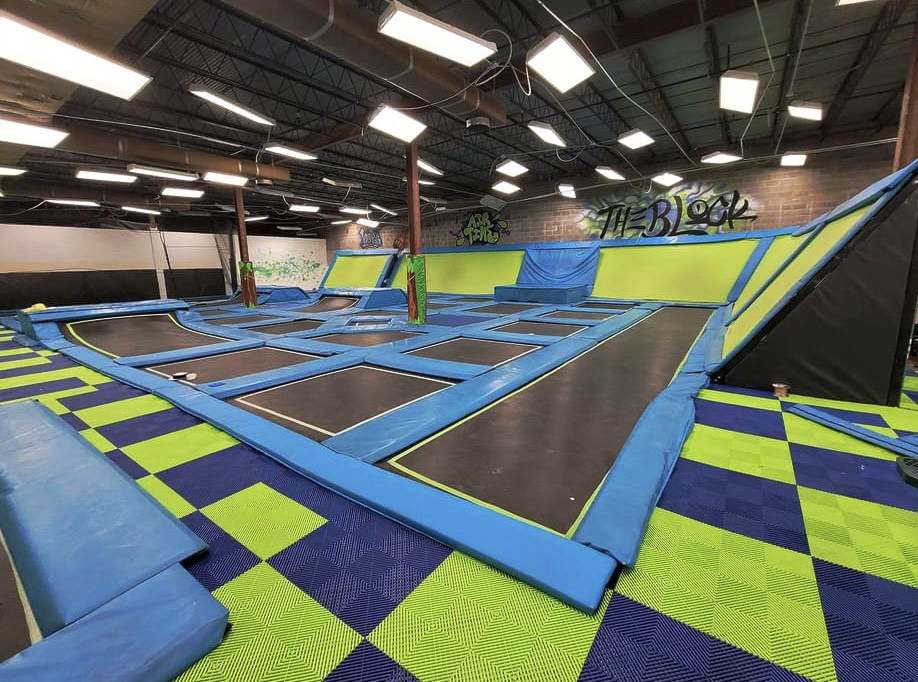
- Trampoline parks
- Miniature golf
- Rage rooms
- Laser tag
- Obstacle courses and ninja warrior gyms
- Roller skating rinks
- Bowling alleys
- Axe throwing
Why choose a franchise instead of starting from scratch?
Opening an FEC venue by joining a franchise can feel less daunting than starting independently, especially for first-time operators, because much of the groundwork has already been done. The biggest appeal is reduced uncertainty, since you are not inventing every system, decision, and process from zero.
Franchising can lower risk by giving you a FEC business model that has already been tested, along with clear operating systems, defined processes, and a brand that guests may already recognize. Many franchisors also provide support during site selection, build-out, and launch, which can make an otherwise overwhelming phase feel more manageable.
It can also speed things up. With a franchise, operators often move faster from lease signing to opening day because many decisions are already made, and that includes the attraction mix, pricing models, staffing plans, and even birthday party packages.
Another benefit is the franchise network itself, since many operators value the ability to learn from peers who are running the same model. You hear what works and what does not, and you gain insight into common challenges before you encounter them yourself, which can be difficult to replicate when operating alone.
Still, franchising is not right for everyone, and the same structure that helps some operators can feel restrictive to others. Brand standards can limit creative freedom, vendor requirements can affect margins, and royalties reduce take-home profit, so these trade-offs are real and deserve honest consideration.
FEC franchise vs. independent ownership
Both paths can lead to FEC profitability. The right choice depends on how much autonomy you want, how comfortable you are building systems yourself, and how much support you value.
Here is a side-by-side look:
|
Criteria |
Franchise |
Independent |
|
Brand recognition |
Built-in brand awareness |
Must build brand from scratch |
|
Startup support |
Training, playbooks, launch guidance |
Self-directed or consultant-based |
|
Operational freedom |
Defined standards and systems |
Full creative and operational control |
|
Software and vendor flexibility |
Often restricted to approved partners |
Complete freedom to choose |
|
Cost structure |
Franchise fee plus royalties |
No royalties, higher upfront planning costs |
|
Scalability and growth |
Easier to replicate systems across locations |
Requires custom systems and discipline |
The right path for you depends on your budget, experience, long-term goals, and preference. Some operators start with a franchise to learn the ropes and reduce early risk, then open independent locations later. Others begin independently to retain full control and later choose to franchise once they want to scale or additional support.
How to start a family entertainment center franchise
1. Choose the right franchise brand for you
As you evaluate FEC franchise options, it is important to look closely at how the brand operates day-to-day, how much flexibility you will have as an owner, and what kind of support you can expect to receive.
Beyond the attractions, look closely at:
- Brand reputation and guest experience quality
- Franchise fees and royalty structure
- Depth of training and ongoing support
- Vendor and equipment partnerships
- Flexibility around design, programming, and pricing
- Required technology platforms
- Territory protection and expansion rights
2. Understand the startup costs
Starting a Family Entertainment Center franchise is a capital-intensive venture that requires significant upfront investment and strong financial backing. Because these centers range from small 5,000 sq. ft. boutique arcades to 50,000+ sq. ft. destination parks, costs vary significantly by concept.
The following chart outlines estimated cost ranges based on current industry benchmarks.
|
Expense category |
Small concept |
Mid-to-large concept |
|
Franchise fee |
$30,000 – $50,000 |
$50,000 – $100,000+ |
|
Minimum liquid capital |
$200,000 – $400,000 |
$500,000 – $1,500,000 |
|
Minimum net worth |
$500,000 – $1,000,000 |
$1,500,000 – $5,000,000+ |
|
Leasehold/construction |
$150,000 – $400,000 |
$1,000,000 – $3,500,000+ |
|
Attractions and equipment |
$200,000 – $600,000 |
$800,000 – $5,000,000+ |
|
Insurance and licensing |
$15,000 – $35,000 |
$50,000 – $150,000+ |
|
Software and technology |
Varies |
Varies |
|
Pre-opening marketing and staff |
$25,000 – $75,000 |
$100,000 – $300,000+ |
|
Total estimated investment |
$450,000 – $1,200,000 |
$2,500,000 – $10,000,000+ |
Sources:
- https://www.marwey.com/family-entertainment-center-costs-roi.html
- https://slickcity.com/franchise/
- https://www.franchisegator.com/franchises/launch-entertainment-park/
- https://www.dreamlandplayground.com/blog/how-much-does-an-indoor-playground-cost-a-complete-2026-budgeting-guide
- https://franchisecreator.com/franchising-your-business-costs-2026/
Indoor family entertainment center franchises often require significant upfront investment, and build-out costs alone can be substantial, which makes this very different from a small retail or food service operation. Working closely with the franchisor and a financial advisor helps you build realistic projections, and conservative assumptions tend to serve operators better over the long run.
3. Choose your location carefully
Location can make or break an FEC franchise, because even the strongest concept struggles if families cannot find it or reach it easily.
Important factors include:
- Visibility and access from major roads
- Parking and ease of entry for families
- Demographics, especially households with kids
- Competition, both direct and indirect
Ceiling height, square footage, and layout flexibility - Room for future expansion or additional attractions
Many franchisors assist with site approval and lease negotiation, and some get deeply involved in layout and design, while others simply review plans at key milestones. Understanding how hands-on that process will be helps avoid surprises later.
4. Set up your operations
Operations are where theory meets reality, and even a well-known brand can struggle without strong execution on the ground.
Key operational areas include:
- Hiring and training front-line staff
- Safety checks, maintenance, and compliance
- Birthday parties, group events, and programs
- Food and beverage, if offered
- Local marketing and community partnerships
Consistency matters here because guests expect the same quality experience every visit, whether they come in on a quiet weekday afternoon or during a packed Saturday birthday rush.
5. Choose your management platform
Trying to manage bookings, waivers, POS, parties, and reporting manually gets messy fast, which is why most family entertainment center franchises rely on all-in-one venue management software.
It’s important to choose a modern platform that can help you:
- Manage bookings, POS, waivers, and memberships in one place
- Keep pricing and products consistent across locations, saving setup time and ensuring brand consistency
- Collect automated guest feedback for faster actionable insights
- Track performance with clear reports and dashboards
Common challenges to watch out for
- High upfront investment and ongoing royalties: Build-out costs, equipment, and initial fees add up quickly, and ongoing royalties reduce margin over time, which means operators need consistent volume and strong cash flow to stay comfortable.
- Limited flexibility around branding and programming: Franchise standards can restrict how much you customize attractions, pricing, promotions, or events, which can feel frustrating in markets where local preferences differ from the brand playbook.
Staffing shortages and turnover: FECs rely heavily on front-line staff, and hiring, training, and retaining reliable team members can be an ongoing challenge, especially during peak seasons or in tight labor markets. - Safety, maintenance, and compliance demands: With physical attractions come responsibility for guest safety, which means regular safety checks, ongoing equipment maintenance, and regulatory compliance all require constant attention, not just at opening but every day.
- Balancing local personality with brand standards: Guests often respond to a sense of local community, but franchise rules can limit how much personality you inject, creating tension between consistency and connection.
- Dependence on franchisor systems and updates: Technology, processes, and operational changes are often controlled at the brand level, which means franchisees rely on the franchisor’s roadmap and responsiveness when improvements or fixes are needed.
None of these are deal breakers, but they do require realistic expectations, strong operators, and thoughtful planning. Going in with eyes open makes all the difference, especially in a business where execution matters as much as the concept itself.
Managing multi-location growth
Effective family entertainment center franchise management becomes essential as your business scales.
As operators expand beyond a single location, challenges multiply and become harder to contain, since pricing can start to drift, staff training can grow uneven, reporting can fragment, and the guest experience can feel noticeably different from venue to venue. What worked when you were hands-on every day becomes harder to maintain once decisions are spread across multiple teams and locations.
This is where multi-location franchise management becomes critical, because consistency rarely happens by accident at scale.
Platforms designed for multi-venue operations, like ROLLER, allow operators to:
- Manage multiple locations from a single dashboard
- Sync products, pricing, and promotions across venues
- Roll out changes quickly without rebuilding everything
- Compare performance across locations in real time
The goal is not control for control’s sake, but alignment, since guests notice when things feel off, even if they cannot quite explain why, and those small inconsistencies tend to add up over time.
Final thoughts: Setting your venue up for success
A family entertainment center franchise can be a deeply fulfilling business because it brings people together, creates lasting memories, and can generate strong returns when run well.
Success depends on careful planning, disciplined execution, and attention to day-to-day operations, and while the right brand and location are critical, strong operations keep the lights on and thoughtful use of technology supports growth and consistency, even though it cannot guarantee either.
If you are exploring FEC franchise opportunities and want to see how modern venue management platforms can support real-world operations, book a demo to see how ROLLER can streamline multi-venue management, simplify bookings and reporting, and help maintain a consistent guest experience across locations.
Disclaimer: This article is not intended as legal advice. Venues should coordinate with the appropriate bodies for specific information about regulations and guidelines.
Frequently asked questions about family entertainment center franchises
What is a family entertainment center franchise?
A family entertainment center franchise is a business model where an operator runs a multi-attraction entertainment venue using an established brand, concept, and operational framework provided by a franchisor. Instead of building everything from scratch, the franchisee follows defined brand standards, operating systems, and guest experience guidelines while managing the location day to day. In exchange, the operator pays an upfront franchise fee and ongoing royalties and receives access to training, support, and proven processes.
How much does it cost to open a family entertainment center franchise?
The cost to open a family entertainment center franchise varies widely depending on the size of the venue, the types of attractions offered, and the brand you choose. Typical costs include the franchise fee, construction and build-out, attraction equipment, insurance, staffing, technology, and working capital. Smaller FEC concepts may require several hundred thousand dollars in total investment, while large, multi-attraction destinations can require several million dollars or more. Most franchisors also set minimum liquidity or net worth requirements to ensure operators can support the business through its early stages.
Are family entertainment center franchises profitable?
Family entertainment center franchises can be profitable, but profitability depends on several factors, including location, operating efficiency, cost control, and consistent guest demand. Venues that perform well typically offer strong guest experiences, attract repeat visits through parties and memberships, and manage staffing and maintenance effectively.
What are the benefits of joining a family entertainment center franchise?
The benefits of joining a family entertainment center franchise often include brand recognition, access to a proven business model, structured training, and ongoing operational support. Franchisors typically provide guidance on layout and design, vendor partnerships, marketing resources, and technology recommendations, which can help operators open faster and avoid common startup mistakes.
What is the difference between owning a franchise and starting an independent family entertainment center?
The difference between owning a franchise and starting an independent family entertainment center comes down to structure versus flexibility. A franchise offers established systems, brand recognition, and ongoing support, but it also requires following brand standards and paying ongoing fees. An independent FEC gives the owner full control over branding, attraction mix, pricing, and operations, but it also requires building all systems, processes, and marketing from scratch. The right choice depends on your experience, budget, and how much autonomy you want as an operator.
What should I look for when choosing an FEC franchise?
When choosing an FEC franchise, it is important to evaluate brand reputation, startup costs, support systems, and flexibility. A strong FEC franchise should offer clear training, transparent financial expectations, approved vendor networks, and effective technology platforms. You should also review the Franchise Disclosure Document and speak with existing franchisees to understand real-world performance and challenges.
What software do family entertainment center franchises use?
Family entertainment center franchises typically use all-in-one venue management software to handle bookings, waivers, point-of-sale transactions, memberships, and reporting. The right software for a family entertainment center franchise helps streamline operations, maintain pricing consistency, and track performance across attractions and locations, which is especially important for franchises managing multiple venues or high guest volume.
Related articles
.png)

.webp)
.jpg)
.jpg)