Obstacle Course Franchises: A Step by Step Guide
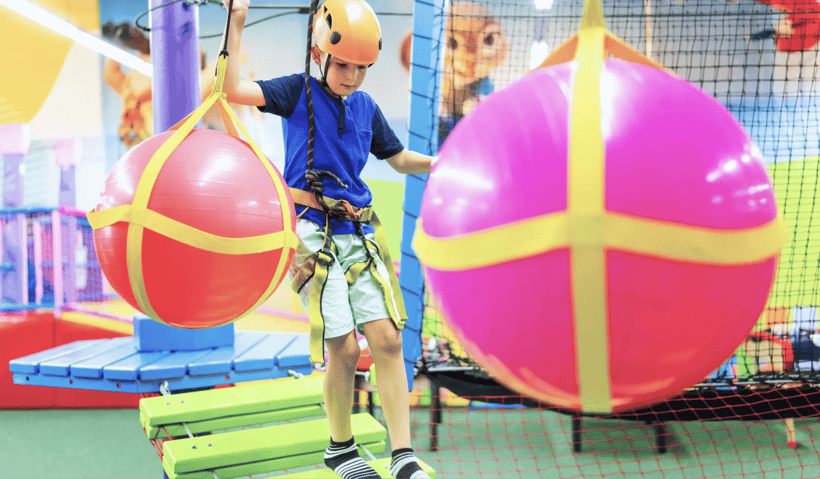
Obstacle courses have a way of turning even the most laid-back people into fierce competitors. Maybe it's the chance to prove you can swing from one platform to another without looking down, or the satisfaction of finally nailing a balance beam that's beaten you twice before. Whatever it is, obstacle-based fitness has moved well beyond TV competitions, field days, and military training grounds. These days, you can find obstacle course gyms tucked into shopping centers, sprawling warehouse spaces, and Family Entertainment Centers (FECs) nationwide.
As the industry grows, so does interest in turning these spaces into viable businesses. If you've been thinking about opening your own obstacle course franchise, you're not alone. This guide walks through what it actually takes to get started, from understanding the franchise model to managing day-to-day operations. Learn about costs, location strategy, technology, and the kind of operational challenges that show up once the doors open.
Obstacle course industry growth
Obstacle courses appeal to a wide range of people including families searching for something more exciting than another movie outing, fitness enthusiasts looking for variety beyond the gym, and kids who want to play in ways that build real physical skills.
Experiential leisure is on the rise, and obstacle courses fit perfectly into that trend because people crave activities they can share, record, and remember. Industry projections reflect this demand and the global obstacle course facility industry could reach $10.2 billion by 2033.
Families are a major growth driver, as parents actively seek experiences that get kids off screens and into challenges that build confidence, while adults flock to obstacle course racing events like Spartan races and Tough Mudders and need training grounds to prepare. The result is a market that serves multiple age groups with varied motivations and keeps revenue steady throughout the year.
What is an obstacle course franchise?
An obstacle course franchise is a business model that allows you to open and operate an obstacle-based fitness or entertainment facility under an established brand. As a franchisee, you run the day-to-day operations, but you follow the franchisor’s proven systems (including course design standards, safety procedures, pricing models, programming, and marketing guidelines) to deliver a consistent experience across all locations. In return, you typically pay an initial franchise fee plus ongoing royalties that give you access to the brand’s training, support, vendor partnerships, and operational playbooks.
These facilities are designed around physical challenges that test strength, balance, coordination, and problem-solving. These spaces feature a mix of obstacles like warped walls, cargo nets, rope swings, balance beams, climbing structures, tunnels, and modular setups that can shift based on skill level or event type.
The layout and focus of obstacle course franchises can vary significantly. Some brands operate more like a ninja obstacle course franchise with swinging holds, grip obstacles, and upper-body courses that mimic what you'd see on competitive TV shows. Other obstacle course venues incorporate elements that appeal to younger kids or groups looking for team-building activities, like crawl spaces, foam pits, and play-based obstacles.
What separates these venues from traditional gyms is the experience itself. Instead of repetitive sets on machines, participants navigate courses that feel like both play and training. You're not counting reps, you're trying to reach the next platform without touching the ground or figuring out how to conquer a balance obstacle that's beaten you twice before.
Most family entertainment center franchises offer multiple revenue streams: Open gym time for drop-in play, structured classes for skill development, birthday parties and group events, competitive teams or leagues, and seasonal camps for kids. This mix helps stabilize income throughout the year and appeals to different customer segments.
Franchise vs. independent obstacle courses
If you’re evaluating an obstacle course franchise opportunity, deciding between a franchise and independent ownership is one of the most important choices you will make. Each path has distinct advantages and challenges, and the right option depends on your experience, resources, and how much control you want over your business.
Franchises offer a ready-made system with proven obstacles, pricing, and operations, along with brand recognition that can attract families and fitness enthusiasts right from the start. You also gain access to ongoing training, marketing support, and a network of other owners who can share insights and solutions. The tradeoff is flexibility because franchises require you to follow established guidelines, and new ideas often need approval. Upfront fees and ongoing royalties are also part of the package.
Independent ownership gives you full creative control over your brand, facility design, pricing, and operations. You can tailor every detail of the experience to match your vision and keep all the revenue. The challenge is that every system, from staffing to safety protocols to marketing, must be built from scratch, and scaling additional locations requires more effort. Success relies entirely on your planning, execution, and ability to adapt.
The chart below breaks down the pros and cons of each approach so you can quickly compare and decide which path aligns best with your goals, risk tolerance, and vision for your obstacle course business.
|
Ownership Type |
Pros |
Cons |
|
Franchise |
|
|
|
Independent |
|
|
How to start an obstacle course franchise
Opening an obstacle course franchise is not something to do on a whim. It requires careful planning, significant capital, and the ability to manage multiple moving pieces at once. Here’s what the process typically looks like.
1. Choose the right franchise brand for you
Start by researching franchises in your region and understanding what they offer. Some cater to competitive athletes, others focus on family entertainment, and a few try to do both. Evaluate brand reputation, franchise fees, royalties, operational support, supplier partnerships, and design flexibility. Request the Franchise Disclosure Document (FDD) from any brand you are seriously considering, as it details financial performance, franchisee turnover, litigation history, and total investment requirements. Marketing materials are helpful, but firsthand insights from franchisees provide a clearer picture of day-to-day operations.
Talk to current franchise owners beyond the ones the franchisor recommends and ask about profitability, hidden costs, and lessons learned.
2. Understand startup costs
Opening a franchise requires substantial upfront investment. The total estimated investment for an obstacle course franchise location typically ranges from approximately $400,000 to $1 million or, depending on the brand, facility size, and complexity of the course. Here are some of the costs fees you’ll need to consider:
- Franchise fee: Usually $50,000 to $150,000, depending on brand and territory.
- Capital requirements: Many franchisors require proof of liquid assets ranging from $100,000 to $500,000
- Construction and fit-out: Proper flooring, safety padding, structural support for obstacles, and enough space for everything safely.
- Equipment: Obstacles such as warped walls, cargo nets, rope swings, climbing structures, and modular challenges can be a significant part of your startup investment.
- Insurance: Liability, property, and workers’ compensation coverage are higher than traditional gyms due to the nature of the activities.
- Software: Booking systems, point-of-sale platforms, waiver management, and membership tools streamline daily operations.
Working with a financial advisor who understands the fitness or family entertainment industry helps create realistic projections for your market and facility size.
3. Pick your location
Location is critical. Most franchisors will approve your site and may assist with demographic analysis, lease negotiation, or zoning guidance. Indoor obstacle course franchise locations should consider ceiling height (most need 15 to 20 feet, some 30 feet or more), square footage (11,000 to 30,000 square feet for a full layout), foot traffic and visibility, parking and accessibility, and potential for future expansion. Urban locations attract walk-ins but cost more and may have smaller footprints, while suburban sites allow larger facilities at lower cost but require more marketing to drive awareness.
4. Set up operations
Once your space is secured, hire and train staff who understand obstacle techniques, safety protocols, and how to work with both kids and adults. Implement clear safety procedures for spotting, fall zones, emergencies, and equipment maintenance to create a confident and secure environment.
Develop membership programs that cater to individuals, families, students, and corporate groups, including drop-in rates, monthly memberships, class packages, and party bookings.
Marketing should combine franchisor campaigns with local outreach, including partnerships with schools, community centers, and sports leagues, social media advertising, and a grand opening event to showcase your facility.
5. Choose your management platform
Modern venue management programs like ROLLER consolidate everything you need in one system, allowing online booking, digital waivers, party coordination, and POS transactions to flow smoothly. Key features include capacity management, cashless payments, reporting and analytics, and multi-location management for future growth.
Choosing software early gives you time to configure, train staff, and test the customer experience before opening day.
Read more: How Elev8 Play Reopened in 12 Hours and Future-Proofed Their Venue
Key factors for success with your obstacle course franchise
Opening the doors is just the beginning. Long-term success depends on how well you execute across several key areas.
Location selection can make or break your business. Research demographics, competition, and accessibility carefully before signing a lease to ensure your facility has the best chance to thrive.
Staffing and safety standards are critical in obstacle-based venues. Your team needs to know how to spot participants, explain techniques clearly, and respond effectively to injuries or emergencies. Consistent training and clear safety protocols protect both your guests and your business.
Guest experience and retention determine whether people return, since first impressions matter, but so does the experience on their fifth or tenth visit. Keep obstacles fresh, provide progression paths for regulars, and cultivate a community atmosphere that makes everyone feel welcome.
Technology that streamlines operations frees up time and mental bandwidth, allowing you to focus on the areas that truly grow your business, including coaching, events, marketing, and community engagement. Platforms like ROLLER help franchise operators manage bookings, memberships, parties, and daily operations efficiently so you can spend more time on what matters most.
Marketing and community engagement
Marketing an obstacle course franchise is about more than running ads; it’s about creating a community centered on shared challenges, personal growth, and having fun.
Social media and referral programs work especially well for obstacle venues because people love sharing videos of themselves conquering a warped wall or completing a tough course. Encourage user-generated content and make it easy for members to tag your venue in their posts to amplify reach organically.
Partnering with schools, gyms, and local teams builds steady referral streams. Offer field trip packages for schools, corporate team-building events for businesses, and training sessions for sports teams looking to improve agility and strength.
Seasonal events and competitions keep your venue top of mind and give members goals to work toward. Host Halloween-themed obstacle nights, summer camps for kids, or friendly competitions that allow participants to measure their progress and enjoy a sense of accomplishment.
Challenges to watch out for
Running an obstacle course franchise comes with specific operational challenges that require careful planning, and strict safety compliance. Because obstacle-based activities carry more risk than traditional fitness, insurers price coverage accordingly.
You’ll also need to meet both local safety regulations and your franchisor’s internal standards, which can involve extra reporting, inspections, and ongoing documentation.
Staffing turnover is common in the fitness and entertainment industries, so finding and retaining qualified coaches who can teach, inspire, and enforce safety standards takes competitive pay, strong training programs, and a supportive work culture.
Maintaining consistent quality across multiple locations becomes increasingly complex as you scale, requiring systems that ensure each venue delivers the same level of safety, cleanliness, and guest experience. Franchises provide standardized processes to help, but but day-to-day execution ultimately happens at the venue level.
Next steps
Opening an obstacle course franchise is a significant commitment, both financially and personally, and long-term success depends on selecting the right location, creating a safe and engaging environment, hiring staff who are invested in the experience, and establishing strong operational systems. Do your research, understand the investment, and plan carefully.
If you’re ready to explore tools that make running your franchise easier, platforms like ROLLER help operators manage bookings, memberships, parties, and daily operations in one place freeing you to focus on delivering an incredible experience for every guest who walks through your doors. Book a demo today.
Disclaimer: This article is not intended as legal advice. Venues should coordinate with the appropriate bodies for specific information about regulations and guidelines.
Frequently asked questions about obstacle course franchises
How much does it cost to start an obstacle course franchise?
The cost to open an obstacle course franchise depends on the brand, facility size, and location. Expenses typically include the franchise fee, construction and fit-out, obstacle equipment, insurance, software, and working capital for the first few months. Some franchisors also have minimum liquidity requirements to ensure you can sustain the business during the early ramp-up.
Are obstacle course franchises profitable?
Obstacle course franchises can be profitable, but results vary based on location, marketing, operations, and staff. Strong demand, engaging programs, and effective management are key factors in achieving profitability.
What is included in an obstacle course franchise package?
Franchise packages usually include training, operations manuals, branding and marketing materials, recommended layouts, safety protocols, and ongoing support. Some also provide software systems for bookings, memberships, and reporting.
Can I open an obstacle course franchise for kids and families?
Yes, many obstacle course franchises cater specifically to kids and families. Programs, safety features, and facility design can be tailored to provide fun and age-appropriate challenges for all ages.
What software do obstacle course franchises use to manage operations?
Obstacle course gyms typically use software for booking and scheduling, membership management, staff coordination, payment processing, and reporting. Choosing the right platform helps streamline operations and deliver a smooth experience for customers and staff alike.
Related articles

Customer Stories
How Lazer Blaze Is Turning Party Guests Into Regulars With ROLLER Loyalty
July 28, 2026
|
8 mins

Obstacle Courses
Ninja Warrior Franchise Guide: Costs, Opportunities, and Requirements
December 24, 2025
|
8 mins
.webp)
.jpg)
.jpg)