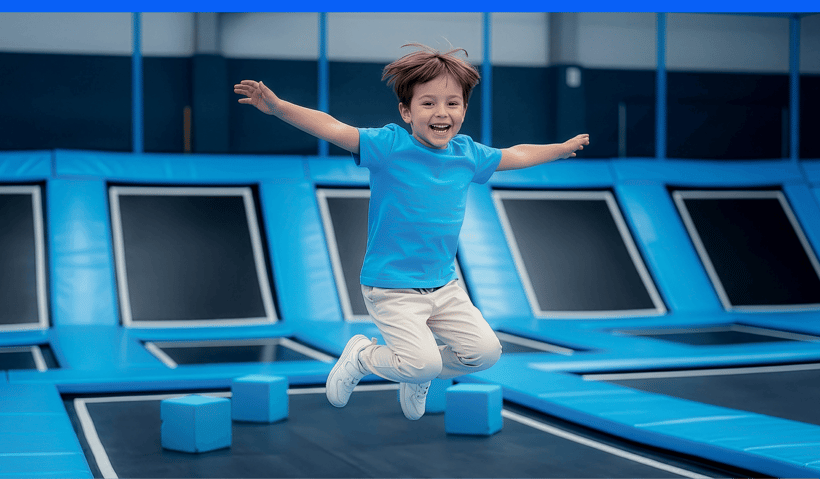
Running a trampoline park means you’re in the business of fun, but, unfortunately, fun doesn’t market itself. Between managing staff, maintaining equipment, and keeping guests safe, marketing is often one of the first things to get pushed aside, which can be risky in competitive local markets where families have multiple options within a short drive. Parks that don’t stand out can be overlooked.
Effective marketing doesn’t require a big budget or a full-time team; it’s about understanding the trampoline park market and audience, showing up where they’re looking, and making it easy for them to choose you.
This guide covers practical, marketing-driven strategies that work specifically for trampoline parks, based on how people actually discover and book experiences like yours.
What is trampoline park marketing?
Trampoline park marketing is about attracting visitors, encouraging repeat bookings, and building a loyal customer base through targeted campaigns and strategic outreach. It goes beyond posting on Instagram or running occasional discounts. Real marketing delivers the right message to the right person at the right time and uses data to guide where to focus your energy.
Promotions and strategy are not the same. A "$10 Tuesday" deal might fill some jump slots, but it doesn’t show who is booking, why they chose your park, or if they will return. That is a promotion, a short-term tactic.
Strategy looks at the bigger picture. It involves understanding your audience, tracking which channels drive bookings, building campaigns that work automatically, and creating systems that turn first-time jumpers into regulars. Promotions are part of that strategy, but they are only one piece of the puzzle.
Think of it like a sport. Promotions are the plays, and strategy is the playbook that decides which to run, when, and how to adapt as you go.
Core trampoline park marketing channels
Different trampoline park marketing channels serve different purposes. Some are great for discovery, others for conversion, and a few excel at keeping customers engaged long after their first visit. Here's how the major channels break down:
|
Channel
|
Use case
|
Example campaign
|
Supporting tools
|
|
Google business profile
|
Local discovery and "near me" searches
|
Optimize listing with photos, hours, and direct booking links
|
Google My Business, local SEO tools, and integrated booking systems
|
|
Email marketing
|
Nurturing repeat visits and upselling memberships
|
Automated birthday reminders with party package offers
|
Email platforms, CRM, and customer data from ticketing
|
|
SMS marketing
|
Urgent offers and last-minute bookings
|
Flash sales for slow weekday afternoons
|
SMS automation, ticketing integration
|
|
Social media
|
Brand awareness and community engagement
|
User-generated content contests, event announcements
|
Instagram, Facebook, TikTok, content calendars
|
|
Paid advertising
|
Targeted reach for specific audiences
|
Google Ads targeting "trampoline park near me"
|
Google Ads, Meta Ads Manager, conversion tracking
|
|
Partnerships
|
Cross-promotion and community presence
|
School PE programs, youth sports league discounts
|
Partnership agreements, co-marketing materials
|
|
Organic search (SEO)
|
Long-term visibility for activity searches
|
Blog content about birthday party ideas, local activities
|
Website, content management, and keyword research tools
|
The key is integration. When your booking system, customer data, and marketing tools talk to each other, you can personalize campaigns, automate follow-ups, and actually see what's driving revenue instead of guessing.
Proven trampoline park marketing strategies
When looking for trampoline park marketing ideas, it’s helpful to prioritize those that are proven to fill calendars, drive repeat visits, and grow consistently.
Membership and loyalty marketing
Memberships provide predictable revenue and higher lifetime value than one-time visitors. A $30 monthly member is worth far more than a guest who visits twice a year. The key is making membership irresistible with perks like guest passes, exclusive hours, birthday discounts, and early access to new attractions.
Loyalty programs work for non-members too. Reward repeat visits and referrals with points or bonuses to keep your park top-of-mind. Automated emails highlighting unused benefits or upcoming member nights can boost engagement and turn casual visitors into regulars.
Birthday and group booking campaigns
Birthday parties are a core revenue driver. Make booking simple with clear pricing, online scheduling, and add-on options like pizza, party rooms, and goodie bags. Capture emails and follow up with reminders and referral incentives to encourage repeat bookings.
Group bookings, including schools, sports teams, scout troops, and homeschool co-ops, target off-peak times and introduce dozens of potential new customers at once. Create dedicated landing pages for each audience and offer weekday rates to fill slow periods.
Off-peak and dynamic pricing
Empty weekday mornings and afternoons still cost your business money, even when the park is quiet. Dynamic pricing helps fill these hours by targeting the right audience with strategic discounts without conditioning customers to expect lower prices every time.
The right software can give you the data you need to change pricing based on demand, day of the week, or current occupancy. You can promote these offers through targeted emails to parents of young kids or homeschool groups, or send SMS flash sales for same-day availability. The goal is to fill slots with the right customers at a price that works for your bottom line.
Email and SMS automation
Automation keeps marketing consistent without extra effort. Useful campaigns include:
- Welcome series for first-time visitors to introduce memberships or offer a return discount
- Birthday reminders with party package offers
- Win-back campaigns for lapsed visitors
- Post-visit follow-ups for reviews or referral incentives
- Membership renewal reminders with one-click options
Email is best for detailed or ongoing communications, while SMS works for time-sensitive offers like flash sales. Automation ensures campaigns run reliably, even when your team is busy.
Google “Things to Do” visibility
Families often search for “things to do” before deciding on weekend plans. A complete Google Business Profile with accurate hours, photos, detailed descriptions, and an integrated booking link puts your park directly in front of these customers.
Encourage reviews through automated post-visit emails to improve visibility and ranking. If your venue software integrates with Google, customers can see availability and book directly, reducing friction and lost bookings.
Using venue software to power better marketing
Marketing is harder than it needs to be when your tools are disconnected. If your ticketing system does not connect to your email platform, booking data lives in separate dashboards, and you are manually exporting customer lists just to send campaigns, you are wasting hours and missing opportunities.
Modern venue management software like ROLLER brings everything together in one system, including online ticketing, guest profiles, email campaigns, SMS automation, and analytics, making marketing faster and more effective.
With an integrated system, you can:
- Execute campaigns efficiently: Build segments, create messages, and send them without switching platforms or manually uploading data.
- Personalize based on behavior: Target members differently from one-time visitors or reach out to guests who have not returned in 60 days with a tailored win-back offer. The software already knows who is who.
- Attribute revenue to campaigns: See which emails, SMS messages, or promotions actually drove bookings and revenue, not just clicks or opens. You will know if a flash sale or birthday promotion worked.
- Automate repetitive tasks: Set up birthday reminders, welcome emails, or post-visit review requests once and let the system run them automatically.
Integrated tools also make the customer experience seamless. Online ticketing reduces friction, guest profiles allow precise segmentation and messaging, and built-in analytics show what is working so you can optimize. Using technology this way makes marketing achievable and effective, even when your team is stretched thin.
Measuring success: marketing metrics that matter
You cannot improve what you do not measure. These are the numbers that show whether your marketing is actually working
- Bookings by channel: Track where reservations come from, such as paid ads, organic search, email campaigns, social media, or partnerships. If Instagram drives awareness but email drives bookings, adjust your focus and budget to prioritize what works.
- Repeat visit rate: Look at the percentage of customers who return within 90 days. This shows whether your experience is engaging or if you are constantly chasing new visitors. High acquisition with low retention means you are losing customers and should improve the experience before spending more on ads.
- Campaign ROI: Compare revenue generated by a campaign to the cost of running it. For example, $500 spent on Facebook ads that generate $2,000 in bookings equals a 4x return. Integrated tools make tracking this simple without manual calculations.
- Customer lifetime value (LTV): Understand how much an average customer is worth over time. Members and repeat visitors have higher LTV than one-time jumpers. Knowing how much a typical customer is worth in revenue helps you decide how much to invest in acquiring them.
Most modern venue management platforms include POS analytics and reporting dashboards that surface these metrics automatically. You do not need to pull data from Google Analytics, email platforms, booking systems, and accounting software to piece together the story.
Track these metrics monthly, watch for trends, focus on what works, and stop investing in what does not.
Common trampoline park marketing mistakes
Even experienced operators make these mistakes. Here’s what to avoid:
Over-discounting
Constant deals train customers to wait for a sale instead of booking at full price. If every email promises "50% off," people stop valuing your regular rates. Use discounts strategically for specific goals, such as filling off-peak hours, rewarding loyalty, or attracting new members.
One-off campaigns
Running a single promotion and hoping for results rarely works. You send one email, get a few bookings, and then go quiet for months. Marketing builds momentum over time, so consistency is more effective than occasional big pushes. A steady drumbeat of smaller campaigns keeps your park top-of-mind.
Not tracking results
If you cannot connect a campaign to actual bookings and revenue, you are flying blind. “We got 500 likes on that post” does not tell you if it generated income. Always measure performance, even if the results are disappointing. Understanding what does not work is just as valuable as knowing what does, because it shows where not to waste money next time.
Final takeaways
Trampoline park marketing is about showing up consistently, knowing your audience, and using tools that make execution easier. Parks that grow treat marketing as an operational advantage rather than an afterthought.
The right venue management platform connects customer data, campaign execution, and revenue tracking in one place, turning marketing from a guessing game into a reliable growth engine.
Start with one or two strategies from this guide, test them, and measure the results. Then expand from there. Your calendar and your team will thank you.
Book a demo today to see how ROLLER can help you set your park up for success.


.png)
.png)
.webp)
.jpg)
.jpg)