At TrainerTainment, I spend my days helping family entertainment centers strengthen three things: sales, service, and leadership.
My own background is in training and leadership development, with a focus on how young people learn and grow, which matters more than you might think when so much of your frontline team is 17 to 25 years old.
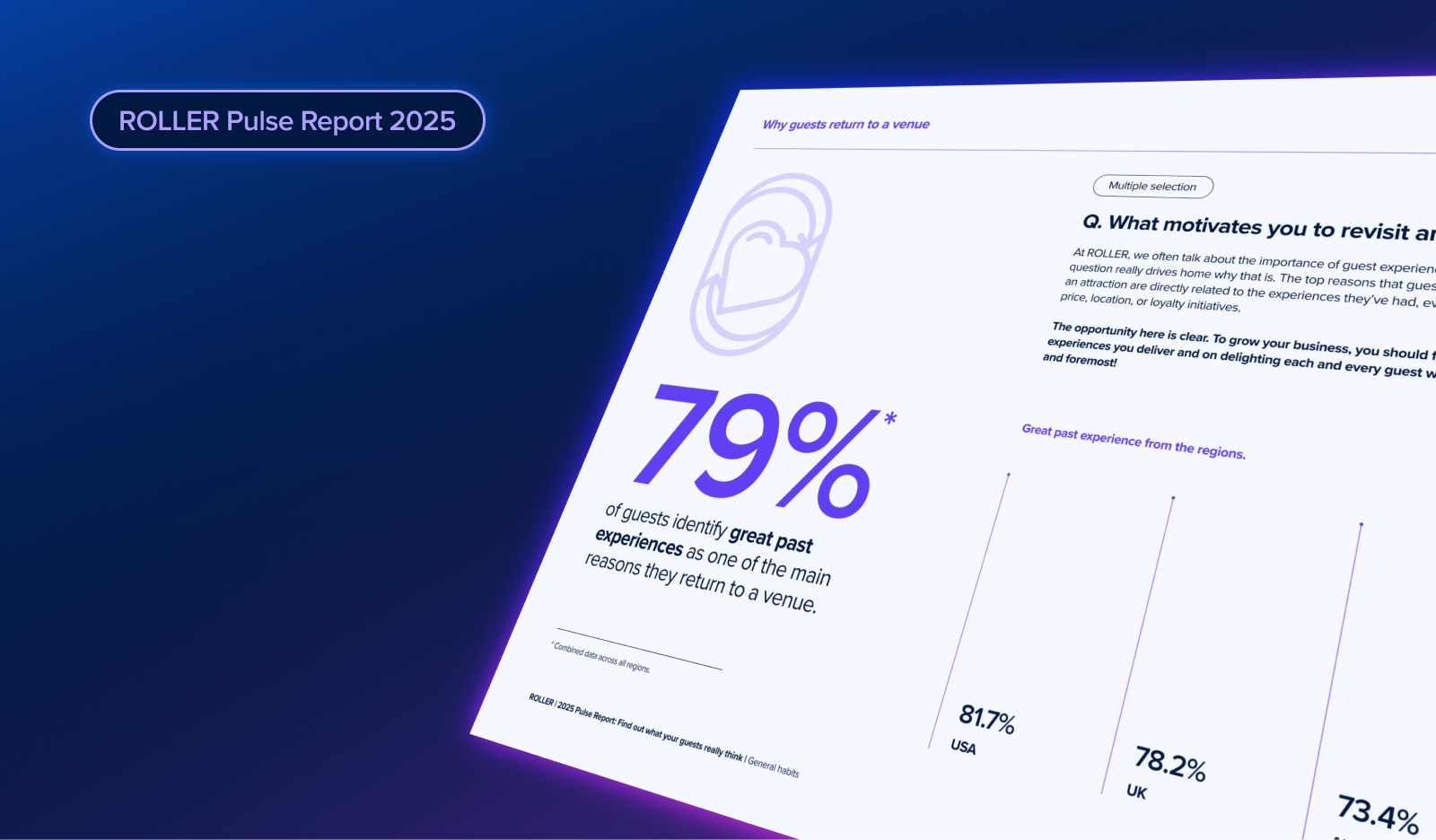
So when ROLLER's 2026 Pulse Report found that 56.4% of guests say the single biggest reason they visit an attraction is that it consistently delivers a great experience (ranking well above price, rewards, and convenience), it did not surprise me one bit. People want to feel that their money was well spent, and the surest way to deliver that at an attraction is to make guests feel welcome.
We call it guest service, not customer service, for a reason. A guest is someone you expected, someone you are glad to see, the way you would welcome a friend into your home. Get that right and people come back, and they tell others. Here is what that looks like in practice.
First impressions
We make a first impression in about seven seconds, and so does your venue. I can usually tell within that window whether a center delivers consistent guest service, and it shows up in small ways.
Is the trash can already full when I walk in? Are the cafe tables clean? How does it smell, especially in a trampoline park or roller rink where there are piles of shoes by the door? Is the redemption counter organized and dusted, or has nobody wiped the glass in a week?
None of this is nitpicking. The first things a guest sees are a trickle-down signal of everything happening behind the scenes: staffing, training, and leadership.
It is the same idea as curb appeal. If the entrance is not clean and welcoming, guests start to wonder about the things they cannot see, like the safety of the attractions.
Signage matters here too. Read your own signs the way a guest would. Are they listing everything people cannot do, or showing them what they can? A wall of rules leaves guests feeling like they are about to get in trouble. A welcoming sign, or better yet a friendly person, tells them they were expected.
Atmosphere is never an accident
The Pulse Report found that 92.7% of guests say the overall atmosphere and social vibe of a venue is important to their experience, with nearly half calling it extremely important.
Here is the thing about vibe: every venue creates one, whether you do it on purpose or not. If you are not shaping it intentionally, it is being shaped for you by whoever you happened to hire and how they treat guests on any given day.
So if I see operators underestimating anything, it is hiring and training, and even further back, core values.
If guest service is not a defined core value, that is where you have to start. And those values cannot live in a corporate binder. They have to be simple enough that someone in their first job can hold onto them. Sometimes that means focusing on three values rather than ten. If you want a team that is happy, energetic, and ready to walk up and talk to guests, you need a hiring process that actually screens for those qualities.
Your staff are the experience
The Pulse Report also found that staff and service quality influenced 77.5% of guests' decisions to return.
The hard part is that hiring and training never ends. You will never be perfectly staffed. You build a great team, someone graduates or moves on, and you start again, and the generation you are training keeps changing too.
The operators who get this right treat it as ongoing work, not a one-month project. They review their training materials at least once a year and keep a feedback loop going on what is working and what is not.
At TrainerTainment, we even run job fairs and group auditions where candidates play games and interact with one another, because that is how you see someone's real personality.
A person can seem perfect across a desk and freeze up the moment they have to greet a stranger. Putting people into those scenarios shows you who will thrive on your floor. And it has to be driven from the top, from ownership and general managers all the way down.
Be proactive, before guests have to come looking
Another finding that rings true from the Pulse Report: 84.9% of guests say proactive staff engagement is important to them.
Good guest service is a bit like improv. You walk up, say hello, and check in. New staff often worry it will feel awkward, but once they realize most guests actually want to be checked on, it gets a lot easier with a little practice.
Guests need it more than we assume, because we forget how much we know that they do not. We give attractions and packages fun names that do not describe what they are. We shorthand everything. Then a guest walks in, sees the attraction menu, and has no idea what a gold package includes or whether that game has a booster. They want someone to check in so they know they have everything they need.
One of my favorite descriptions for this came from a team at a bowling center: prairie-dogging. It is that guest standing up and looking around for a staff member. If your team is paying attention, they spot it and go help. You do not need to interrupt every guest every fifteen minutes, you just need staff who are aware and can spot a guest who needs help.
Word of mouth is your most powerful marketing
The report also found that 61.8% of guests are very likely to recommend a venue when they enjoy the overall experience.
Word of mouth is how people find us. It is the parent telling another parent, the friend telling a friend. And people rarely recommend a place over one good thing. They recommend the whole experience: we all had fun, and it was worth what we paid.
That last part matters. Value is not about discounts. It is about whether what guests paid matched what they got. Nobody expects a local bowling center to cost what an amusement park does, but the experience has to line up with the price either way.
Interestingly, some of the best word of mouth comes from how you handle things going wrong. People will happily tell others, "we had a hiccup and they fixed it right away." That builds trust. So does visibility. Guests love being able to put a face to a name and say the manager or owner came over.
There are really two sides to word of mouth. There is the guest side, and there is the sales side, which is huge for events and corporate bookings.
An event planner is far more likely to call you because a colleague said "talk to Genevieve, she took care of us" than because they found you online. That comes from relationships, from being visible in your community, and from sponsoring the things that connect with your ideal guests. People want to root for people.
Where to start
If I could give operators one practical place to begin, it would be this: take a real look at your core values and your training materials, and make a plan for how often you will update them.
Align them so that a brand-new team member who has never held a job can connect with them. Then carry those same values into your hiring process, so the people you bring on are the ones who will deliver the experience you are aiming for.
Everything in the Pulse Report points back to the same simple idea. Guests want to feel expected, not surprised. They want to walk in and know that you were ready for them, glad they came, and prepared to take care of them. Build for that, and the visits, the returns, and the recommendations follow.
Want even more insights into what guests want from venues in 2026? Download your free copy of the 2026 Pulse Report today.



.webp)
.webp)
.jpg)
.jpg)