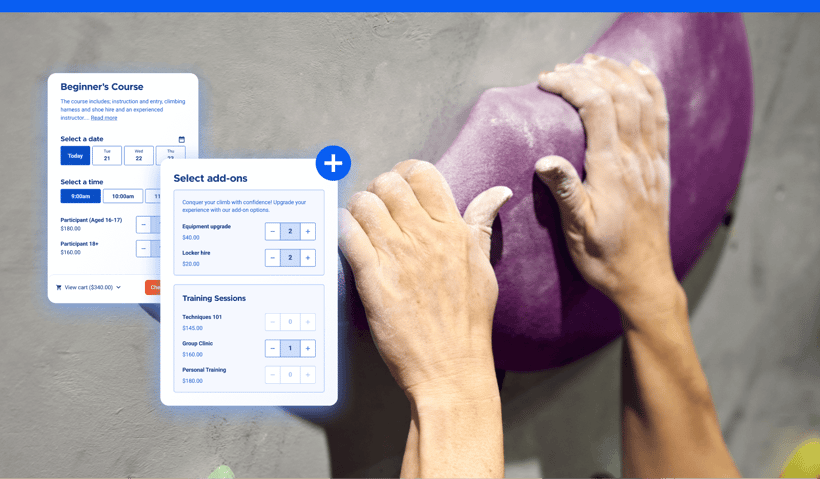
Running a climbing gym involves far more than memberships and front desk check-ins. On any given day, your climbing gym team may be handling waiver collection, belay certifications, gear rentals, youth programs, roped sessions, bouldering passes, classes, retail sales, and birthday parties, often all at once.
As gyms grow, these workflows become more complex. Traditional fitness software rarely accounts for climbing-specific needs like certification tracking, gear inventory, session management, or multi-program scheduling. When systems don’t reflect how climbing gyms actually operate, the result is longer lines, manual workarounds, and missed revenue opportunities.
Purpose-built climbing gym software is designed around these realities. It helps streamline daily operations, manage peak-hour traffic more efficiently, and give operators clear visibility into performance and growth, whether you’re running a single location or scaling to multiple sites.
What is rock climbing gym software?
Rock climbing gym software is built specifically for indoor climbing centers. It connects memberships, bookings, digital waivers, point of sale, certifications, reporting, and guest data into a single system designed around how climbing gyms actually operate.
Unlike generic fitness software, a purpose-built climbing platform supports the realities of your facility. That includes tracking belay certifications and safety inductions, managing session-based bookings for bouldering and roped climbing, handling gear rentals, running youth programs and classes, and supporting varied pricing models for passes, punch cards, memberships, and events.
Modern climbing software should also centralize the entire guest journey. From the moment someone books online to when they check in at the front desk, sign a waiver, purchase gear, or renew a membership, everything should be linked to one unified guest profile. This allows you to:
- Flag certified climbers to speed up check-in
- Track visit history and membership status
- Segment guests for targeted marketing
- Monitor online purchasing behavior
- Reduce manual data entry and paperwork
When all systems work together in one modern, cloud-based platform, your team spends less time managing tools and more time delivering a seamless climbing experience.
Core features every climbing gym needs
Not every gym needs every feature on day one, but these are the foundational tools worth evaluating when you're comparing options to ensure your climbing gym booking software can scale with you.
If you’re shortlisting vendors, these are the features to look for:
|
Feature
|
Why it matters for climbing gyms
|
|
Digital waivers
|
Digital waivers for climbing gyms reduce liability and streamline check-in for members and guests.”Waivers should link directly to bookings and memberships, not live in a separate system you have to cross-check manually.
|
|
Memberships
|
Recurring billing, membership tiers, family passes, and student discounts are standard for most gyms. Your software should make it easy to manage renewals and track member activity.
|
|
Point-of-sale (POS)
|
You're not just selling day passes. You're handling gear rentals, retail, snacks, drinks, and maybe even classes or private coaching. An integrated climbing gym POS system reduces errors and speeds up checkout.
|
|
Online bookings
|
Guests expect to book passes, classes, and events online. If your system doesn't support this, you're either turning away revenue or fielding booking calls all day.
|
|
Check-in tools
|
Climbing gym check-in software helps staff process memberships, waivers, and class attendance quickly during peak hours.
|
|
Reporting
|
You need visibility into membership trends, daily attendance, revenue by category, class enrollment, and gear utilization. Good reporting helps you make smarter decisions about staffing, pricing, and programming.
|
Software use cases by gym type
Not all climbing gyms operate the same way, and the software you choose should reflect how your facility actually runs day to day.
Bouldering gyms
In a bouldering gym, operations are typically more streamlined. There are no belay certifications to manage, and traffic often leans heavily toward day passes and walk-ins. In this environment, speed matters. Software should make it easy to process check-ins quickly, offer flexible pass options, and handle digital waivers without slowing down the front desk. Clear visibility into peak hours is also important so you can manage capacity and staffing without frustrating guests or turning people away during busy sessions.
Roped climbing facilities
Roped climbing facilities introduce more complexity. Tracking belay certifications becomes essential, as does managing equipment rentals, intro courses, and private instruction. If your gym offers top-rope sessions or structured programs, your software needs to support class scheduling, instructor assignments, and organized group bookings without creating extra administrative work. When these processes are handled manually or across disconnected tools, small errors can quickly compound during peak periods.
Youth programs and schools
Gyms that run youth programs or partner with schools face an additional layer of structure. You’re not just managing bookings, you’re collecting waivers from parents, tracking attendance across recurring sessions, and often coordinating billing for groups. In these cases, software should support recurring enrollments, clear communication with parents, and reporting that shows how programs are performing over time. Without that visibility, it’s difficult to plan staffing, adjust pricing, or understand which programs are truly driving growth.
Multi-location operators
Multi-location operators need centralized visibility. If you're running two or three gyms, you’ll want centralized reporting so you can see performance across sites without logging into separate systems. Membership data should sync in real time, and guests should be able to visit different locations without repeating paperwork or re-registering.
At the same time, local managers may need flexibility to adjust pricing, promotions, or programming based on their specific market. Strong multi-location software balances centralized oversight with local control, helping maintain consistency without creating unnecessary friction.
How to evaluate rock climbing gym software
When you're comparing platforms, it helps to have a framework. Here are the areas worth focusing on.
Ease of use
Ease of use matters more than you think. Your front desk staff shouldn't need a manual to check someone in or process a membership upgrade. Look for intuitive interfaces, clear workflows, and software that includes training so your team can get up to speed quickly. If the demo feels clunky, it'll probably feel clunky when you're using it during peak hours too.
Climbing-specific workflows
Climbing-specific workflows are where most generic fitness tools fall short. Can the system track belay certifications? Does it support gear rentals? Can you set up different pricing for bouldering versus roped climbing? If the platform wasn't built with climbing gyms in mind, you'll spend a lot of time working around its limitations.
Scalability
Scalability is worth thinking about even if you're just starting out.You may be running one location today, but if you add lanes, expand your youth programs, or open a second gym, will the software grow with you? Platforms that require expensive add-ons or custom development to handle more complexity aren't as flexible as they seem.
Support and onboarding
Support and onboarding can make or break your experience. Make sure onboarding is included, not sold separately. Ask about support hours. If something breaks on a Saturday afternoon, can you get help? How long do support tickets typically take to resolve?
Integrations
Integrations reduce manual work and keep your data consistent. Does the software connect to your accounting system? Can it integrate with payment processors you're already using? If you're running a loyalty program or email marketing tool, can those systems talk to each other? The fewer data silos you have, the better.
Common mistakes when choosing rock climbing gym software
Choosing generic fitness tools
Choosing generic fitness tools is probably the most common misstep for operators. A system built for traditional gyms might handle memberships and check-ins, but it won't support belay certifications, gear tracking, or climbing-specific class formats. You'll either spend time building workarounds or end up switching platforms later.
Prioritizing price over fit
Prioritizing price over fit is understandable when budgets are tight, but it can backfire. A cheaper platform that doesn't support your workflows will cost you more in the long run through staff time, missed revenue, and operational friction. Pay attention to what you're actually getting, not just the monthly fee.
Ignoring reporting and data
Running your business without reporting and data is like driving with no dashboard. If your software can't show you membership trends, class performance, or revenue by category, you're flying blind. Strong reporting helps you identify what's working, where you're losing money, and how to grow strategically.
Read more: How ROLLER iQ Makes Business Intelligence Smarter and Simpler for Operators
How modern venue management platforms support climbing gyms
Modern venue management platforms like ROLLER streamline climbing gym operations by combining ticketing, memberships, waivers, POS, and reporting in a single system.
By centralizing data, staff can see all guest information at check-in, payments are processed automatically, and online bookings flow seamlessly into the system. This integration reduces errors, speeds up operations, and gives operators actionable visibility into performance and capacity.
For gyms planning to grow, ROLLER also simplifies multi-location management, centralizes reporting, and ensures consistent experiences across sites. Whether you manage one facility or several, the system scales with your business.
With the right climbing gym management software in place, daily operations become seamless, freeing your team to focus on guest experience and growth.
Book a demo to see how ROLLER can help your rock climbing gym thrive.