Whether you’re a kid or an adult, when you think back on the best parties you’ve ever been to, there’s a good chance a bowling alley celebration comes to mind. Kids love the lights and high-energy fun, parents appreciate the minimal prep and easy cleanup, and operators value them for what they are behind the scenes: a reliable revenue stream.
From kids’ birthday parties to corporate events, bowling alley parties draw larger groups and higher food and beverage spend than typical visits, while also introducing your venue to new audiences who often turn into repeat guests.
In this guide, we’ll show you how to get more out of bowling parties, with practical ideas for designing and pricing packages, simplifying booking and day-of operations, and driving repeat bookings. We’ll also explore how party booking software reduces friction at every step.
Why bowling parties are a revenue engine
Bowling parties consistently outperform standard visits when it comes to revenue. According to the 2026 Attractions Industry Benchmark Report, party bookings bring higher booking volumes, bigger average order values, and stronger demand for premium packages and add-ons.
It's easy to see why. When a party books two lanes for two hours, adds pizza and pitchers, and brings in a dozen guests, the per-guest spend quickly outpaces a typical walk-in visit.
Parties drive long-term loyalty, not just one-off revenue
The value doesn't stop after the last frame. Birthday parties repeat annually, teams celebrate season after season, and corporate groups often return to the same venue when events go well. Once someone has a smooth, stress-free bowling party at your center, they tend to come back, and they bring new people with them.
The data backs this up. Venues offering parties see repeat visitation rates of 40.8%, compared to 25.6% at venues that don't offer party bookings, according to the 2026 Attractions Industry Benchmark Report.
Designing bowling alley party packages guests can’t resist
The key to designing effective party packages is eliminating decision fatigue. Start with clear core inclusions (lane time or number of games, shoe rental, hosted service, and a reserved party area) so guests quickly understand what they're getting and can focus on choosing the right tier rather than piecing together details.
Tier your packages to guide decisions
Structuring packages into "Good," "Better," and "Best" gives guests options without overwhelming them. The base tier covers the essentials, the middle adds popular upgrades like extra time or upgraded food, and the top includes premium touches such as VIP lanes, themed décor, or dedicated service.
A simple comparison table that shows what's included at each level builds trust and speeds up decision-making. When guests can see the difference at a glance, they're more confident choosing, and they'll often gravitate toward the middle or top tier.
Make food and beverage part of the package, not an afterthought
Food and beverage deserves special attention because it drives both satisfaction and revenue. Pairing pizza or flatbreads with shareables like wings or fries works well for mixed-age groups, while pitchers and specialty drinks simplify ordering for larger parties.
Premium dessert add-ons like cakes, cupcakes, or over-the-top milkshakes create easy upsell opportunities. Including vegetarian or allergy-friendly options ensures everyone in the group feels welcome.
Read more: Bowling Alley F&B Guide: How to Build a Profitable Concession Program
Use add-ons and modifiers to keep things flexible
Beyond the core packages, bundles and paid modifiers give hosts a way to customize without complicating the booking process. Extras like additional lane time, arcade credits, or experience upgrades let guests tailor the party
Pricing your bowling party packages
There's no single right way to price a bowling party, but clarity always wins. Guests should be able to look at your options and immediately understand what they're getting and what it costs. When pricing feels simple and fair, people are more confident booking, and more likely to add extras along the way.
Choose a pricing model that fits your venue
Some centers price per guest, others price per lane, and many use a hybrid approach that sets a base lane fee plus a per-guest food and beverage package. Whichever model you choose, deposits and minimum spend requirements help protect your calendar and reduce last-minute cancellations.
From there, tiered pricing does the heavy lifting. Offering a "Good," "Better," and "Best" structure gives guests an easy comparison and naturally nudges them toward the mid or top tier. When you position the middle option as the most popular and clearly show the value compared to purchasing items separately, guests feel good about spending more.
Use time-based pricing to fill quieter slots
Not every time slot carries the same demand, and your pricing should reflect that. Peak weekend afternoons can command premium rates, while early sessions or weekday evenings are ideal for value-driven packages or seasonal promotions.
Track performance and refine over time
Pricing isn't a set-and-forget exercise. Reviewing your data regularly, looking at metrics like average order value, how often guests add extras, and which packages are most popular, helps you spot what's working and catch missed opportunities before they add up. Small adjustments each month keep your pricing sharp and your revenue growing.
Read more: How to build a pricing strategy that supports your business goals
Bowling party add-ons and upgrades that lift spend per head
Add-ons work best when they feel celebratory, not transactional. A short list of thoughtful upgrades gives hosts a way to personalize the event without overthinking it.
Common winners include:
- Glow bowling or a lighting upgrade
- Extra lane time or a private lane area
- Arcade credits or redemption pack bundles
- Premium desserts like cakes, cupcakes, or milkshakes
- Themed décor kits and photo backdrops
- A VIP host or dedicated runner
- Keepsake merch such as signed pins, shirts, or souvenir cups
If you want to go further, custom-themed menus can tie food directly into the celebration and increase perceived value without major operational changes. This guide on creating custom menus offers ideas that translate well to parties.
Streamlining your bowling party booking experience
A smooth booking experience sets the tone for the entire party. When it's easy for guests to find availability, choose a package, and confirm their booking, they feel confident, and confident guests are more likely to add extras and spend more.
Make online booking effortless
Making it easy to book parties online has a huge impact on both revenue and guest satisfaction. Mobile-first flows that show availability by headcount and date, let guests place deposits, and provide instant confirmation reduce friction and give hosts confidence that their party is secured.
Allowing guests to adjust headcount, add-ons, and payments before the event keeps everything flexible, reduces last-minute stress, and frees your team to focus on delivering a great experience.
Simplify guest lists, waivers, and communications
Managing bowling alley parties shouldn't feel like managing a spreadsheet. Guest list tools that let hosts upload contacts, send invitations, and track RSVPs reduce confusion and improve turnout, and give you cleaner data for follow-up.
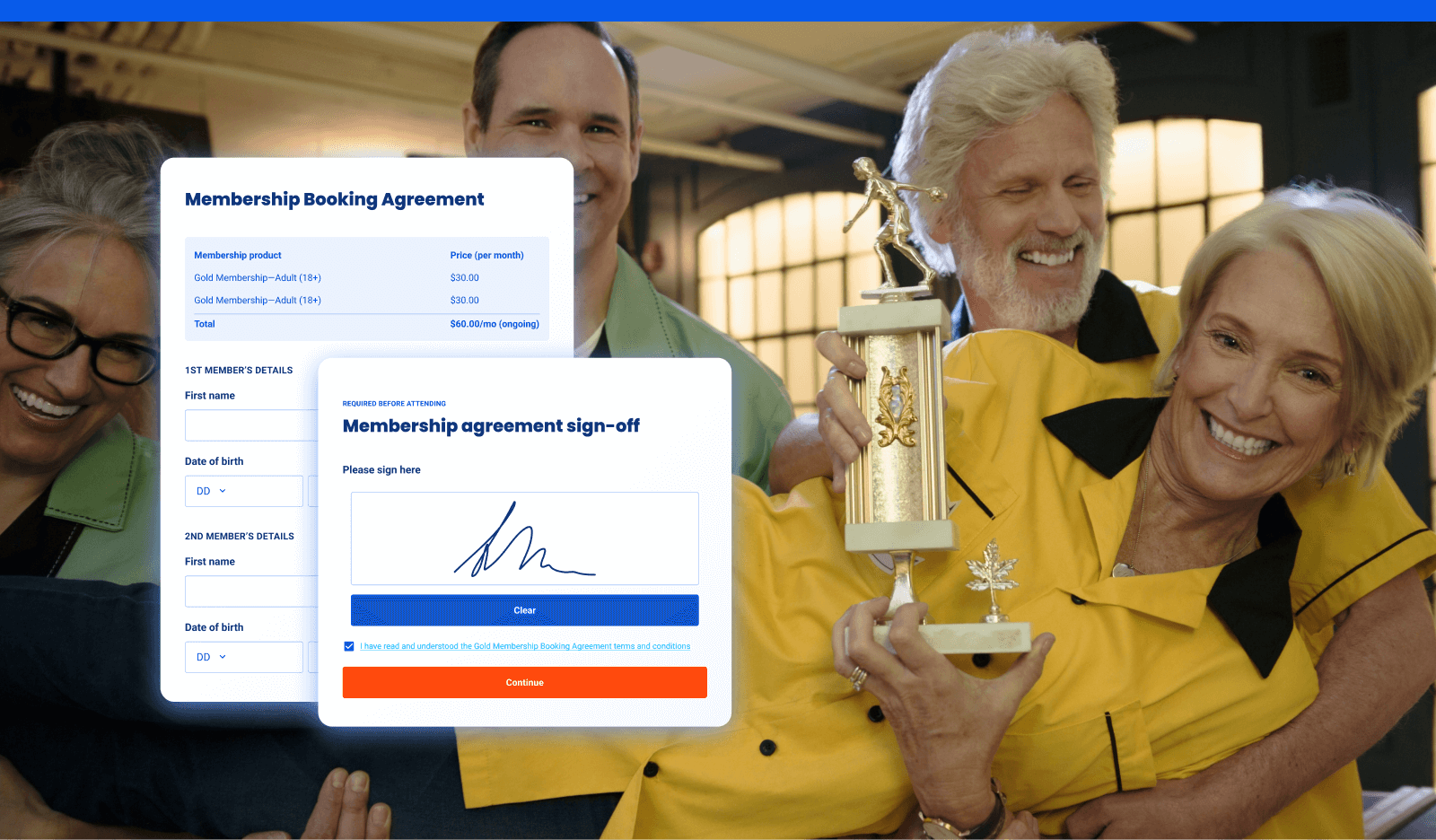
Digital waivers can also streamline the party process. When parents and guardians sign waivers before arrival, check-in moves faster and lines stay shorter. That first impression matters, especially for large groups arriving at once.
Automate the details so your team doesn't have to
Automated payment links and reminders help collect balances ahead of time and minimize no-shows. Self-service kiosks and lane-side check-in speed up arrivals, letting guests print party passes or receive instructions without waiting in line.
Automated communications round out the experience. Pre-event reminders can cover parking, socks, and arrival times, while post-event thank-yous and rebooking offers keep the relationship going without extra effort from your team.
How to run flawless party days
Even the best packages fall flat without solid execution. A clear run-of-show helps everyone stay calm and on track.
Key party operational basics include:
- Staggered start times with buffers for lane turnover and cleaning
- Party rooms prepped in advance with pre-portioned food where possible
- Clear roles for hosts, runners, and supervisors
- A simple 90 to 120 minute timeline covering check-in, bowling, food drops, cake, photos, and wrap-up
- A recovery plan for issues like late food or lane delays, including quick comps such as desserts or arcade credits
When issues do come up, fast acknowledgment and a small gesture often turn frustration into appreciation.
Marketing your bowling parties all year round
Keeping bowling alley parties top of mind requires consistent party campaigns across your channels. Homepage banners and a clear “Book a Party” link make it easy for visitors to see their options, while social posts featuring real guests build trust and excitement before they reach out.
Seasonal campaigns help create urgency around key moments such as back-to-school, holidays, graduations, and team banquets. Targeting the right audience ensures your message lands where it matters most, with families often booking weekend afternoons, teens gravitating toward evening slots, and corporate groups planning for weekdays.
Remarketing and local partnerships add an extra layer of strategy. You can reconnect with visitors who did not complete a booking using emails, SMS reminders, or ads, while collaborations with schools, sports leagues, and HR teams extend your reach and attract new groups that might not otherwise discover your venue.
Turning one-time party guests into loyal regulars
The real value of a party shows up after it ends. Post-party bounceback offers, discounted game passes, or short-term membership trials give guests a reason to return while the experience is still fresh.
Birthday calendars make follow-up easier. Annual reminders and automated outreach for next year’s celebration reduce the effort required to rebook. Over time, tracking metrics like rebook rate, party average order value, add-on attach rate, and guest satisfaction helps you spot what’s working and where to adjust.
What’s next?
The best bowling parties don't just generate revenue on the day, they bring people back. A group of parents watches their kids have a great time, and suddenly you've got three more birthday bookings on the calendar. A corporate team has a smooth, well-catered outing, and they're locking in the same slot next quarter.
That's what happens when the full experience works: packages are easy to understand, booking is painless, food arrives without anyone chasing it down, and the host walks away feeling like they pulled off something great without the stress. Each of those moments is a chance to turn a one-time group into regulars.
You don't need to overhaul everything at once. Start with your most popular package, tighten the booking flow, and make sure your follow-up is doing the work after the party ends. Small, intentional improvements add up fast, especially when the systems behind them are doing the heavy lifting.
Ready to see what that looks like? Book a demo to see how ROLLER can help you streamline the party process.




.webp)
.jpg)
.jpg)