Zoo Management Software Buyer’s Guide: Ticketing, Encounters, and Memberships
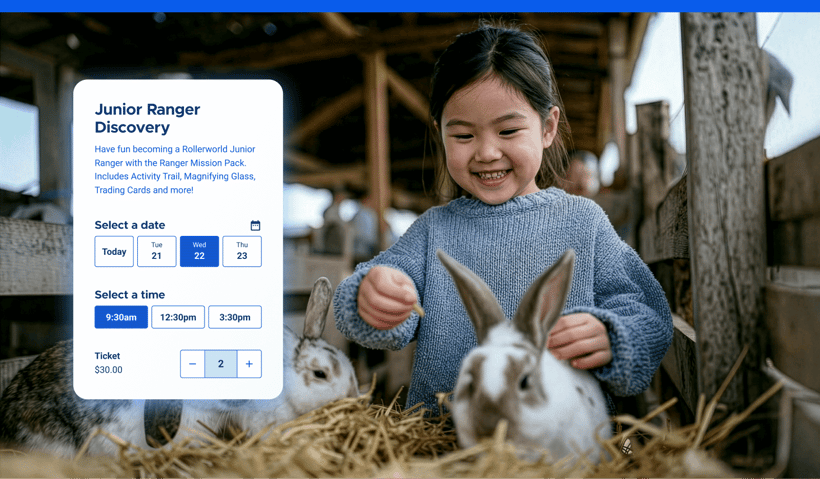
Zoos exist to educate, conserve, and inspire, and delivering on that mission requires a stable, well-run operation behind the scenes.
Most zoos and wildlife parks start their search focused on animal records or husbandry tools. That's understandable, since the animals are, after all, the reason people show up. But animal care software alone doesn't sell timed entry tickets, manage membership renewals, or tell you why your Tuesday revenue is half of Saturday's.
As zoos grow more complex, operators increasingly look for zoo management software that supports both conservation goals and revenue operations. The right platform supports the entire visitor journey, from online booking and timed entry to memberships, retail purchases, and post-visit engagement. We’ll guide you through the options so you can find the right solution for your business.
What is zoo management software?
Zoo management software is a platform that helps zoos, aquariums, and wildlife parks manage visitor bookings, ticketing, memberships, payments, and on-site operations, sometimes alongside animal husbandry or keeper management tools.
Zoo management software, sometimes referred to as zoo and aquarium management software, generally falls into two categories: Legacy systems and modern, integrated platforms. Legacy tools were often built around animal records and internal operations, with admissions and revenue features added over time. They can require manual processes and disconnected reporting.
Modern platforms are designed around the full visitor journey, combining ticketing, memberships, point of sale, and real-time data in one system, reducing workarounds and giving operators clearer visibility into performance.
Zoo management software features
Here are the capabilities you should think about when comparing platforms:
|
Capability |
What it is |
Why it matters |
|
Allows guests to purchase tickets online before arriving and select their preferred date or time. |
Reduces queues at the entrance, improves attendance forecasting, and allows guests to plan visits more easily. |
|
|
Lets guests reserve specific time slots for park entry, tours, or animal encounters. |
Helps manage visitor flow, prevents overcrowding, and protects animal welfare during popular experiences. |
|
|
Tracks member accounts, renewals, benefits, and visit history in one system. |
Encourages repeat visits, simplifies renewals, and helps operators build long-term relationships with loyal guests. |
|
|
Processes purchases across food outlets, retail stores, and add-on experiences. |
Speeds up transactions, reduces lines, and centralizes revenue reporting across the venue. |
|
|
Volunteer management |
Organizes volunteer roles, schedules, and communication. |
Ensures volunteers are deployed effectively to support guests, assist staff, and enhance educational programs. |
|
Provides insights into attendance, ticket sales, memberships, and spending patterns. |
Helps operators make informed decisions about staffing, pricing, programming, and seasonal promotions. |
The connective tissue between your tools matters just as much as any single capability. For example, a ticketing system that doesn't talk to your POS means staff reconciling two sets of data at the close of business. A membership tool that's disconnected from your CRM means you can't identify which members haven't visited in six months and might be about to lapse.
Well-integrated software keeps these systems connected, reducing manual work and giving operators a clearer picture of how the entire venue is performing.
Zoos, aquariums, and wildlife parks: Same family, different needs
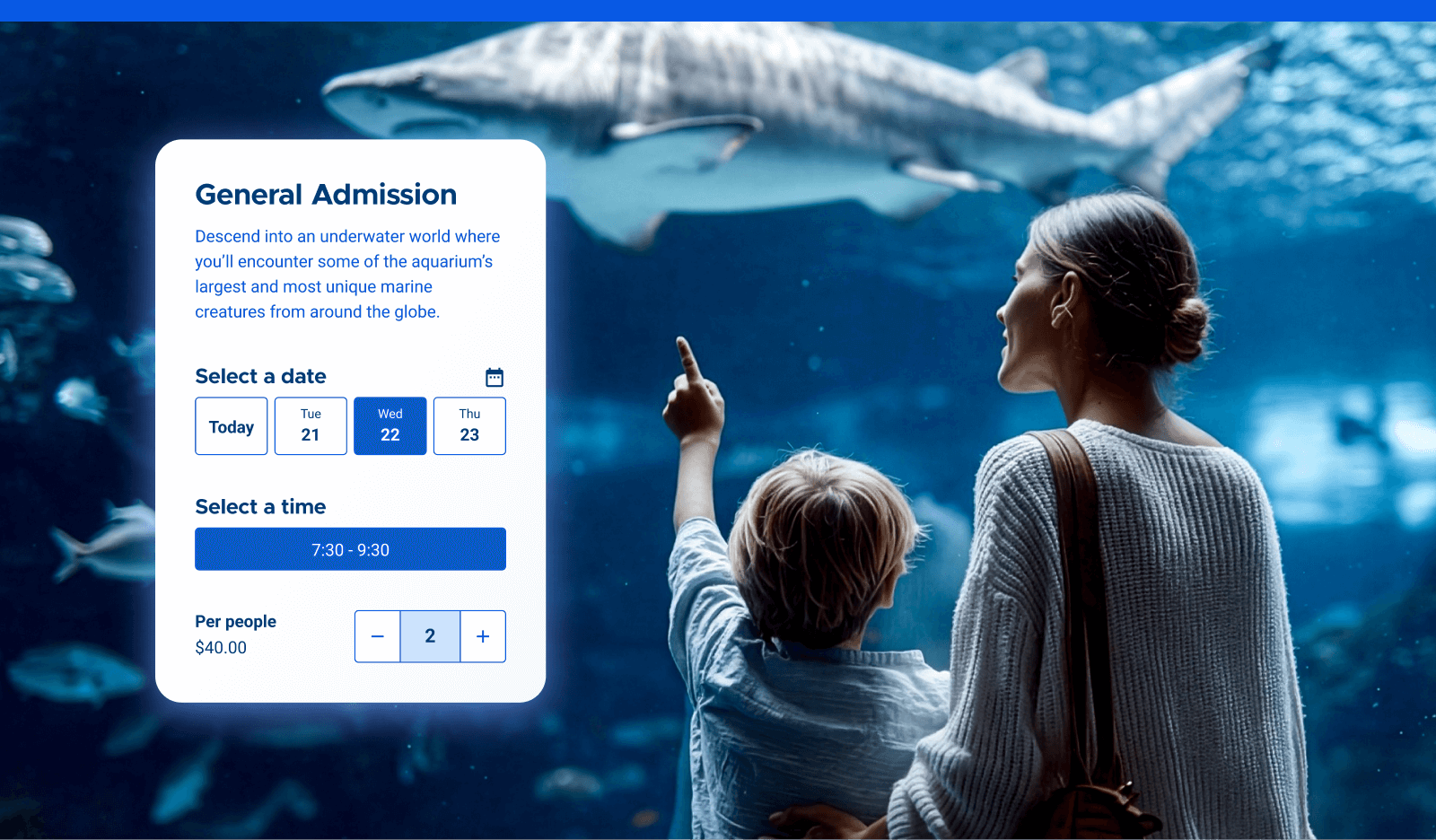
Zoos and aquariums share a lot of operational DNA. Both sell timed entry, manage members, run school programs, and rely heavily on seasonal visitation patterns. But aquariums often have higher throughput in a smaller physical footprint, which puts more pressure on crowd flow management and lane-based ticketing. For example, a zoo spread across 40 acres has different challenges than an aquarium where 3,000 people are moving through the same building.
Read more: How to Compare Aquarium Software
Wildlife parks and safari experiences introduce additional operational constraints. Drive-through routes and guided tours are often limited by vehicle availability, guide staffing, and fixed departure times. Booking windows, group sizes, and spacing between tours need tighter controls to protect both guest experience and animal welfare. Unlike general admission, safari tours cannot be suddenly increased without creating safety, staffing, and logistical issues.
What ties all three together is the need for a visitor operations platform that treats the guest experience as the primary workflow, with animal and conservation data sitting alongside it rather than replacing it.
How to evaluate zoo management software
Rather than comparing feature lists, evaluate platforms against your actual workflows. Here's what to look at closely.
Integrations
Ask vendors how their zoo ticketing software connects to POS, gate validation, and reporting tools.
A platform with strong individual tools but poor integration will create more manual work than it saves. Ask vendors to show you, live in a demo, how data moves between ticketing, payments, and reporting without any manual steps in between.
Scalability
The software that works fine for 200,000 annual visitors might buckle under 600,000. Ask vendors directly about their largest zoo clients and what the system looks like at volume. What happens to performance on a peak Saturday when hundreds of bookings are being checked in simultaneously? Can the platform support additional venues under one account if you expand? Growth is the goal, and your software should be ready for it before you are.
Reporting depth
This one gets underestimated at the buying stage more often than not. You don't just want to know how many tickets you sold. You want to know which sessions are underperforming, which membership tiers have the best retention, and how per-visit spend has trended over the last three school holiday periods. Shallow reporting means guessing when you should be deciding. Ask to see the actual reports during a demo, not a screenshot of them.
Ease of use
The real test isn't how the software looks in a polished sales demo. It's how quickly a seasonal hire can get up to speed during the first busy weekend of summer. Software that requires a week of training before someone can confidently check in a group booking is going to cause real problems when you need it most. Look for clean workflows, clear navigation, and an onboarding process that doesn't leave your team piecing things together from a help centre.
Guest experience
Software shapes the guest experience more than most operators realise. Slow check-in creates a poor first impression. Clunky online booking leads to abandoned transactions. A confirmation email that doesn't include clear session details generates calls your team has to field. When evaluating platforms, trace the full guest journey from their first click to arrival at the gate and ask where friction could appear. The best systems make that journey feel effortless, even when a lot is happening behind the scenes.
Common mistakes when choosing zoo software
When operators look back on software decisions they regret, a few themes show up repeatedly.
Choosing animal-only systems
Animal care platforms are built for husbandry, veterinary records, and breeding programs. They are not designed to manage ticketing, refunds, memberships, or guest communications. Relying on them for visitor operations often leaves front-of-house teams juggling spreadsheets while back-of-house systems run smoothly.
Overlooking visitor flow
If your system cannot support timed entry, stagger arrivals, or capacity controls for encounters and tours, bottlenecks are almost inevitable. Flow management directly shapes guest experience. Software should make smooth entry and balanced attendance the norm, not something staff have to manually enforce.
Over-customizing legacy tools
Many venues patch older systems with bolt-ons and third-party integrations until workflows become fragile and difficult to maintain. Over time, reporting breaks, updates create new issues, and institutional knowledge lives with a few long-tenured staff members. Eventually, maintaining that complexity can cost more than moving to a purpose-built platform.
Real-world example: Oakvale Wildlife Park
Oakvale Wildlife Park in New South Wales struggled with disconnected systems that handled e-commerce and POS separately. Staff had to manage admissions, retail, food and beverage, and wildlife encounters across multiple tools, which created slow booking processes and unnecessary manual work.
After moving to a unified platform, Oakvale was able to sell animal encounters online for the first time. Previously these experiences had to be booked by phone and recorded manually in a diary. With online booking and capacity controls in place, the park increased animal encounter sales by 300% within six months.
The new system also allowed the park to:
- Manage limited-capacity encounters without double bookings
- Sell admissions, retail, and food from a single POS
- Adjust products and promotions during slower seasons
For operators, this kind of visibility and automation can turn popular experiences into reliable revenue drivers rather than logistical headaches.
Read more: How Oakvale Wildlife Park increased animal encounter sales by 300%
How modern zoo management platforms improve operations and revenue
Modern zoo management platforms help bring together systems that are often disconnected behind the scenes. Ticketing, memberships, POS, and reporting all contribute to the guest experience, and when those tools work together, operations become easier to manage.
For visitors, that coordination shows up as a smoother journey. Guests can book tickets online, receive clear confirmation details, check in quickly at arrival, and move between exhibits, concession stands or cafes, retail, and special experiences without unnecessary friction.
For operators, having admissions, retail, memberships, and program data connected in one place provides clearer visibility into performance. You can track attendance patterns, understand revenue across different experiences, and make more informed decisions about pricing, staffing, and programming.
When the right systems are in place, daily operations become easier to manage while the guest experience stays consistent and reliable.
Book a demo to see how ROLLER helps zoos and wildlife parks streamline operations, manage guest experiences, and grow with confidence.
Frequently asked questions about zoo management software
What is zoo management software?
Zoo management software is a system that helps zoos manage ticketing, memberships, bookings, payments, reporting, and on-site operations in one platform. It centralizes visitor-facing and operational tools so staff can track revenue, attendance, and guest activity more efficiently.
What features should zoo management software include?
Zoo management software should include online ticketing, timed entry controls, membership management, payment processing, reporting, and tools for managing group bookings and special experiences. Strong platforms also support capacity management and integrate with point of sale and gate entry systems.
How is zoo management software different from animal management systems?
Zoo management software focuses on visitor operations and revenue management, while animal management systems focus on husbandry, veterinary records, and care tracking. The two serve different purposes, and zoo operators often need both to support daily operations.
Can zoo management software handle memberships and annual passes?
Zoo management software can handle memberships and annual passes by tracking member accounts, automating renewals, validating access at entry, and reporting on membership revenue and attendance. This makes it easier to manage loyalty programs and member-only events.
Is zoo management software suitable for aquariums and wildlife parks?
Many zoo management software platforms can be suitable for aquariums and wildlife parks because these venues share similar needs around ticketing, capacity management, group bookings, and memberships.
Related articles

.webp)
.jpg)
.jpg)