Ice Rink Management Software: A Complete Buyer’s Guide for Rink Operators
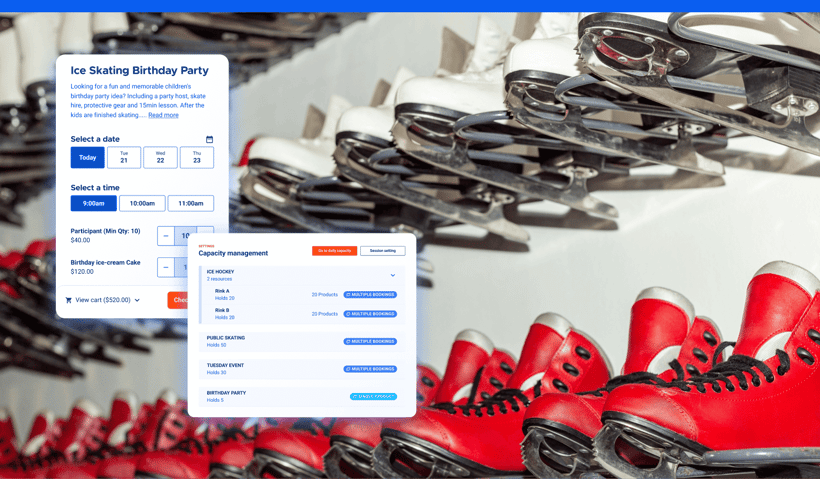
Running an ice rink involves a lot of moving parts between public sessions, lessons, school groups, leagues and tournaments. You need systems that can handle bookings, payments, waivers, skate rentals, concessions, and reporting. When those systems are managed manually or pieced together from disconnected tools, small issues can compound quickly.
Ice rink management software brings those operations into one coordinated platform, helping facilities run smoothly and grow with confidence.
In this guide, we’ll break down the key features, benefits, and selection tips you need to understand how rink management software can transform your facility.
What is rink management software?
Rink management software is a digital platform that helps ice rinks manage key operations such as scheduling ice time, bookings, payments, waivers, staffing, and reporting in one system. By bringing these tasks together, it reduces manual work and helps teams run day-to-day operations more efficiently.
Unlike generic sports or venue tools, rink-specific software is designed for session-based ice scheduling, group management for hockey and skating programs, and compliance workflows without manual workarounds.
Types of rinks that use management software
One thing worth understanding early is that different rink types have genuinely different needs when it comes to ice rink scheduling and management software. A public skating rink runs very differently from a competitive hockey facility, and a multi-use arena has its own layer of complexity.
Here’s an overview of what each type of rink typically needs:
|
Rink type |
Common needs |
|
Ice skating rinks |
Public sessions, lessons, leagues, and birthday parties |
|
Hockey rinks |
League scheduling, team billing, locker room management |
|
Multi-use arenas |
Shared calendars, cross-sport reporting |
|
Seasonal rinks |
Easy online bookings, fast check-in, self-service kiosks, and quick setup |
This matters when you're evaluating software. For example, hockey rink management software might be clunky for a public rink that runs fifteen open sessions a week. Know your rink type, and look for tools that reflect it.
Core features of rink management software
The right rink management software should support the core workflows that keep an ice facility running smoothly. From scheduling ice time and managing bookings to processing waivers and analyzing performance, these features help staff stay organized and keep sessions running on time.
Here are the key capabilities to consider when comparing skating rink software:
Ice time scheduling
You’ll need to be able to easily manage capacity by setting recurring availability, blocking off time for maintenance or private rentals, and see the full week at a glance without squinting at a spreadsheet.
If the scheduling system is clunky, your team will have to spend a lot of time and energy manually running your rink.
Online bookings and Point-of-sale (POS)
Online booking and POS should function as one connected system. Guests want to reserve ahead of time, pay deposits or pay in full, and walk into a smooth check-in experience. Staff need a POS that reflects those bookings in real time so payments, add-ons, and session details are accurate. When bookings and POS are disconnected, busy sessions can become chaotic. When they work together, peak times feel controlled instead of stressful.
Waivers and safety compliance
Waivers are not just a box to check. Ice facilities carry real liability, and disconnected waiver processes create unnecessary risk. The right platform collects digital waivers before arrival, links them to specific sessions or team bookings, and makes them instantly accessible at check-in. That protects the business and keeps lines moving, so your guests can get on the ice faster.
Reporting and analytics
Reporting turns activity into insight. You should be able to see which sessions fill fastest, how revenue breaks down by program type, where ice time is underutilized, and how usage shifts throughout the week. Strong reporting replaces guesswork with data, helping you adjust pricing, add sessions, or rethink underperforming time slots with confidence.
Benefits of using rink management software
Beyond simplifying day-to-day tasks, the right platform creates meaningful improvements across your entire operation.
Operational efficiency
Running an ice facility means juggling schedules, staff, payments, programs, and safety requirements all at once. Rink management software brings those moving pieces into one system, reducing manual work and eliminating duplicate data entry. Instead of switching between spreadsheets, waiver apps, and separate POS tools, your team works from a single source of truth. That saves time, reduces errors, and makes daily operations feel more controlled.
Better guest experience
Guests may never see your systems, but they feel the impact. Online booking, completed waivers before arrival, and a fast check-in process create a smooth first impression. Clear session information and reliable communication build trust. When staff are not scrambling to fix booking errors or track down paperwork, they can focus on welcoming guests and keeping things running smoothly.
Increased ice utilization
Ice is your most valuable asset, and unused time is lost revenue. The right software gives you visibility into availability and demand, helping you adjust schedules, add sessions, or promote underused time slots. With a clear view of how ice is allocated across teams, public sessions, and private hires, you can optimize usage instead of relying on guesswork.
Improved revenue visibility
Without strong reporting, it is difficult to see what is truly driving growth. Rink management software tracks revenue by session type, program, add-ons, and time of day. That clarity helps you identify trends, understand your most profitable offerings, and make pricing or programming decisions with confidence. Instead of relying on instinct, you are guided by real data.
How to choose the right rink management software
The right system shapes how smoothly your rink operates, how confident your staff feels, and how effectively you grow revenue over time.
To evaluate your options clearly, use the questions below to guide your decision.
Is it easy for your team to learn and use?
Look for an intuitive interface, logical scheduling workflows, and built-in training resources. Ice facilities often rely on part-time or seasonal staff, so a system that takes weeks to master will cost you in repeated training and mistakes.
Does it match the complexity of your rink?
A small public rink has very different needs than a multi-sport arena with leagues, lessons, and tournaments. Make sure the platform can handle overlapping ice bookings, recurring team allocations, and program-based scheduling without workarounds.
How does it support the guest experience?
Guests expect easy online booking, digital waivers completed before arrival, deposits or full payments upfront, and fast check-in. The system should connect bookings, waivers, and POS so that staff are not piecing information together during busy sessions.
Can it handle peak time reliability?
Your busiest public skate or tournament weekend is not the time for lag or confusion. Ask how the platform performs during high traffic periods, how it manages real-time availability, and how it handles last-minute changes or cancellations.
How strong are reporting and visibility?
You should be able to track ice utilization, revenue by program, session performance, and underused time slots with clear reports. Strong analytics turn instinct into informed decisions about pricing, scheduling, and promotion.
Is it built to scale with your business?
If you add new programs, expand leagues, or open a second location, your software should support that growth without requiring a full system change. Ask how multi-location management and expanded capacity are handled.
What kind of support and onboarding are included?
Find out how onboarding works and how long it typically takes for a rink like yours. Confirm that support is available during evenings and weekends if that is when you operate. Reliable support is critical in a live event environment.
Are pricing and contracts transparent?
Look closely at what is included in the base subscription. Some platforms charge separately for payments, waivers, reporting, or integrations. Make sure you understand the full cost before committing.
Can you test real scenarios before committing?
During demos or trials, run through realistic situations. Schedule overlapping team practices and public sessions. Process a group booking with waivers and deposits. Pull a weekly ice utilization report. Seeing how the system handles real-world complexity tells you far more than a guided demo.
Rink management software vs manual scheduling
For many rinks, spreadsheets feel manageable at first, but the cracks start to show as bookings grow and operations become more complex. The comparison below highlights where manual systems tend to break down and how dedicated rink management software changes the equation.
|
Manual tools and spreadsheets |
Rink management software |
|
|
Booking visibility |
Fragmented, error-prone |
Real-time, centralized visibility |
|
Waiver collection |
Paper or disconnected tools |
Digital, linked to sessions |
|
Reporting |
Manual, time-consuming |
Automated, accurate |
|
Peak-time handling |
Stressful, inconsistent |
Smooth, scalable |
|
Multi-location management |
Manual processes |
Built-in, centralized processes |
Common mistakes rink operators make when comparing software
Even experienced operators can run into avoidable issues when selecting or managing software. These are the most common pitfalls and why they matter.
Choosing generic tools
A booking system built for restaurants or fitness studios may handle basic reservations and payments, but it is not designed for ice time blocks, session turnovers, league scheduling, or the compliance requirements that come with a higher-risk environment. When software only partially fits your needs, staff end up creating manual workarounds. Over time, those shortcuts lead to confusion, errors, and unnecessary risk.
Overlooking reporting needs
Many operators focus heavily on booking and check-in features, then realize months later they cannot easily answer simple business questions. Which sessions are most profitable? When is ice sitting empty? Which programs are growing? Reporting should be evaluated just as carefully as scheduling or POS. Without strong visibility, decision-making becomes reactive instead of strategic.
Ignoring future growth
The system that works for one rink running a few daily sessions may struggle to support expanded leagues, additional programs, or a second location. Changing platforms later can mean data migration, retraining staff, and operational disruption. Choosing software with the flexibility to scale from the start helps you avoid that costly reset.
Next steps
Choosing the right rink management software comes down to finding a system that supports how your facility actually operates. From scheduling ice time and managing programs to handling payments, waivers, and reporting, the right platform should simplify day-to-day work for your team while creating a smoother experience for guests.
As your rink grows, having connected systems becomes even more important. Purpose-built solutions designed for attractions and leisure venues can help bring bookings, POS, waivers, and reporting together in one place so your staff can spend less time managing systems and more time focusing on guests.
Book a demo to explore how ROLLER helps ice rinks streamline operations, improve guest experiences, and manage growth with confidence.
Frequently asked questions about ice rink software
What is rink management software, and what does it do?
Rink management software is a centralized platform that helps ice rinks manage scheduling, bookings, payments, waivers, staffing, and reporting in one system, giving operators real-time visibility and control over ice time and revenue.
What features should ice rink management software include?
Ice rink management software should include session-based scheduling, online bookings, POS integration, digital waivers, staff permissions, and reporting tools that track utilization and revenue.
How does rink scheduling software manage ice time?
Rink scheduling software manages ice time by using a shared digital calendar to allocate sessions for public skating, hockey, lessons, and rentals, preventing double bookings and improving peak-hour efficiency.
Can rink management software support hockey rinks and leagues?
Rink management software supports hockey rinks and leagues by enabling practice and game scheduling, team bookings, automated payments, and season-long ice usage tracking.
How much does rink management software typically cost?
The cost of rink management software varies based on facility size, features, the number of users, and customization requirements.
Related articles


Ice Skating
Ice Rink Business Guide: Costs, Revenue Opportunities, and Tips for Success
December 2, 2025
|
7 mins
%20(1)-1.png)
Roller skating
Cost Guide: Skating Rink Attraction Ideas With Strong ROI Potential
April 17, 2024
|
7 mins
.webp)
.jpg)
.jpg)