Pricing Strategy Software: How to Set Smarter Prices and Grow Revenue
Pricing is one of the fastest ways to increase revenue, yet many businesses still treat it like guesswork. Set prices too high, and customers walk away. Set them too low, and you leave money on the table. And when prices stay fixed all year, ignoring changes in demand, seasonality, or competition, growth stalls.
The problem is that many teams still rely on gut instinct, outdated spreadsheets, or “what we’ve always done.” In fast-moving markets, that approach makes it difficult to price confidently or adapt when conditions change.
Pricing strategy software helps replace guesswork with data. These tools give businesses the insight and flexibility to analyze demand, test pricing changes, and adjust strategies in real time.
In this guide, we’ll explain what pricing strategy software is, why smarter pricing has become one of the most powerful revenue levers for modern businesses, the key features to look for when evaluating tools, and how to choose the right solution for your needs.
What is pricing strategy software?
Pricing software is a tool that helps businesses set, adjust, and manage prices using rules, demand signals, and performance data. Many modern platforms also function as price optimization tools, helping operators identify pricing opportunities that increase revenue without adding manual work.
In simple terms, it helps you understand whether your prices actually match what the market is willing to pay.
Many businesses manage pricing in spreadsheets. While spreadsheets can track numbers, they cannot analyze trends, identify demand shifts, or show how price changes affect revenue. Pricing strategy software connects the dots between what is happening in your business, like sales volume, bookings, or customer activity, and how your prices should respond.
So instead of guessing whether to raise weekend prices, introduce a discount, or test a new pricing tier, you can use real insights to make confident decisions.
Why pricing strategy matters more than ever
Markets move faster than they used to. Customers can compare prices instantly, and demand can shift based on the day of the week, the weather, seasonality, or even what’s trending online. If your pricing doesn’t keep up with those changes, you risk losing customers or cutting into your margins.
Static pricing made sense when markets were more predictable. But today, customer price sensitivity is higher, competition is tighter, and demand fluctuates more frequently. Businesses that rely on the same prices year-round often miss opportunities to increase revenue or respond to changing conditions.
Strategic pricing takes a different approach. Instead of setting prices once and leaving them untouched, businesses adjust pricing based on real demand, market signals, and customer behavior. The difference between the two approaches is significant:
|
Static pricing |
Strategic pricing |
|
Set once and rarely revisited |
Adjusted regularly based on data and demand |
|
Same price regardless of conditions |
Prices reflect market changes and demand shifts |
|
Revenue potential may be limited |
Revenue optimized across different scenarios |
|
Decisions based on intuition |
Decisions informed by real data |
The businesses that win on pricing are rarely the cheapest. They’re the ones that price with intention, continually test what works, and adjust when the data reveals new opportunities.
Common pricing strategies that pricing software supports
Pricing strategy software isn't locked into one way of doing things. Businesses can implement a variety of software pricing strategies, depending on their market, demand patterns, and revenue goals.
|
Pricing strategy |
What it is |
Example use cases |
|
Static pricing |
Standard admission pricing that doesn’t change |
One, consistent price |
|
Dynamic pricing |
Prices adjust in real time based on demand, availability, or market conditions |
Real-time price changes based on demand, weather, or availability |
|
Variable pricing |
Prices are adjusted based on pre-set factors such as time of day, day of week, or season |
Weekday vs weekend pricing, school holidays vs term time, peak vs off-peak sessions |
|
Value-based pricing |
Prices are set based on the value customers place on the experience, not just cost |
Premium experiences, VIP packages, and add-ons |
|
Tiered pricing |
Multiple price points offering different levels of service or product |
Bundles, membership levels, group sizes |
|
Competitive pricing |
Prices are set based on how your offering compares to competitors |
Market-driven industries where positioning matters |
Read more: Ticket Pricing Strategies: How to Drive Revenue and Keep Guests Coming Back
Key features to look for in pricing strategy software
Not all pricing tools are built the same. Some are designed for large enterprises with dedicated pricing teams, while others are built for operators who simply want clearer, faster pricing decisions. When evaluating options, a few core features matter most.
Data inputs
Good pricing software pulls data from the systems you already use, such as your point-of-sale (POS) , booking platform, or CRM. When these sources feed into one place, the software can analyze real activity like sales, bookings, and customer behavior. If a tool requires constant manual data entry, it quickly defeats the purpose.
Scenario modeling
This feature allows you to test pricing changes before rolling them out. For example, you might want to see what happens if you increase prices by 10 percent, introduce a new pricing tier, or run a limited promotion. Scenario modeling helps you explore these options and understand potential outcomes before making a change.
Performance tracking
Pricing decisions should be measurable. The software should show how pricing changes affect key metrics over time, such as revenue per booking, conversion rates, or average transaction value. Without this visibility, it’s difficult to know whether your pricing strategy is actually working.
Integrations
Strong integrations are essential. Pricing tools should connect easily with systems like your POS system, booking platform, or CRM so data flows automatically. When pricing software fits into your existing tech stack, it reduces manual work and makes it easier to act on insights.
The best pricing strategy software keeps things simple on the surface while giving you the insight needed to make confident pricing decisions.
Pricing strategy software vs. pricing tools vs. optimization tools
These terms are often used interchangeably, which can make it difficult to understand what each type of tool actually does. While they’re related, they serve different purposes.
|
Tool type |
What It does |
Best for |
|
Pricing strategy software |
Helps businesses develop, test, and refine pricing models using data |
Businesses building repeatable, data-informed pricing strategies |
|
Pricing tools |
Performs basic calculations such as margins, markups, or cost-based pricing |
Small teams that need simple pricing math |
|
Price optimization tools |
Automatically adjusts prices using algorithms and predefined rules |
High-volume environments that require frequent or real-time price changes |
Pricing strategy software focuses on the why and how behind your pricing decisions. It helps businesses understand which pricing models make sense and provides the data needed to test and adjust them over time.
Pricing tools are simpler. They help calculate things like margins or markups, but they don’t provide guidance on strategy or performance.
Price optimization tools take a more automated approach. They adjust prices dynamically, often in real time, based on factors like inventory levels, demand, or competitor pricing. This is common in high-volume environments like e-commerce, where prices may change frequently.
Most businesses don’t need fully automated pricing. What they need is the ability to test ideas, learn from the results, and make informed adjustments. That’s where pricing strategy software fits best.
How attractions use pricing strategy software
Attractions highlight the value of pricing strategy software, as demand shifts daily, seasonally, and around holidays or events. Manual or static pricing is slow and often leaves revenue on the table, while modern tools let operators adjust prices strategically without complicating the guest experience.
Peak vs. off-peak pricing
Demand at attractions often varies dramatically between weekends and weekdays, or between peak seasons and slower periods. Pricing strategy software allows operators to set different prices for different times, helping them capture higher demand during busy periods while encouraging attendance during quieter times.
Instead of manually adjusting prices, teams can schedule pricing changes in advance and test how different price points perform. For example, you might charge more for a Saturday afternoon time slot while offering lower prices on a Tuesday morning to help fill capacity.
Group and package pricing
Different customer groups have different needs and expectations. Families, school groups, and corporate events may book at different volumes and respond to different pricing structures.
Pricing strategy software helps operators build tiered pricing and packages that make sense for each audience. Rather than applying blanket discounts, attractions can create structured offers that reflect the value and volume each group brings.
Add-ons and upsells
Add-ons such as premium experiences, fast passes, food packages, or merchandise bundles can significantly increase average order value. Pricing software helps operators track which add-ons guests actually purchase and how price changes affect those decisions.
With this data, operators can refine pricing, test different bundles, and identify opportunities to increase revenue without raising base ticket prices.
Seasonal and event-based pricing
Attendance can spike during school holidays, long weekends, or local events. Pricing strategy software helps operators prepare for these shifts by proactively planning price changes, rather than reacting at the last minute.
By scheduling seasonal adjustments or creating event-based pricing rules, attractions can respond to demand more strategically while maintaining consistent operations.
Read more: Dynamic, Variable and Static Pricing: What’s Best for the Attractions Industry?
How to choose the right pricing strategy software
Choosing pricing strategy software doesn’t have to be complicated. A simple, step-by-step framework can help you make the right decision:
1. Define your pricing goals
Clarify what you want to achieve. Are you aiming to increase revenue, improve margins, fill capacity during slow periods, or a combination of these? Your goals determine which features are most important.
2. Identify your constraints
Consider the systems you already use, the amount of manual work you can realistically handle, and your budget. Being upfront about these limits helps you avoid tools that won’t fit your operations.
3. Match features to reality
Choose software that aligns with your actual needs. Small venues don’t need enterprise-level complexity. Focus on tools that solve your problems without adding unnecessary features.
4. Start simple, scale later
You don’t need every feature on day one. Pick a solution that meets your current needs but can grow with you. The most effective software is the one you’ll actually use, not the one with the longest feature list.
How ROLLER pricing strategy software works
ROLLER’s pricing strategy tools are designed to help operators move from static pricing to a more flexible, data-informed approach, without adding complexity to day-to-day operations.
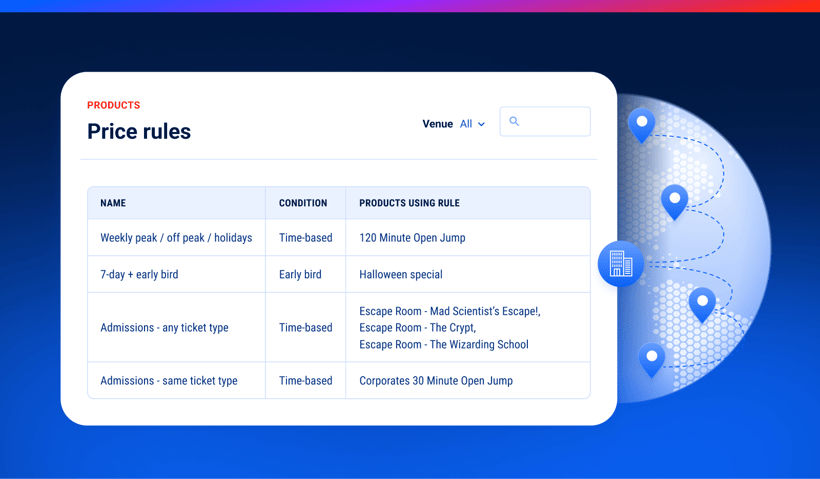
Price Rules allow you to set pricing based on factors like time of day, day of the week, or group size. For example, you might offer lower prices during quieter weekday sessions and higher prices during peak weekend periods. Once set, these rules run automatically in the background, so your pricing stays aligned with demand without constant manual updates.
Discount codes, automated discounts, and “Buy & Get” offers can be used to drive bookings, reward loyal guests, or increase average order value at checkout. These tools are easy to set up and can be applied to targeted campaigns or broader promotions.
With easy reporting and analytics dashboards, you can see how different pricing rules and promotions perform, track changes in demand, and understand which offers drive the most revenue. This visibility makes it easier to refine your approach over time and focus on what works.
Because everything sits within a single platform, pricing is connected to bookings, POS, and guest data. This means fewer manual processes for your team and a more consistent experience for guests, whether they’re booking online, purchasing add-ons, or returning for another visit.
Final thoughts
Pricing is an ongoing strategy. Businesses that succeed align what they need with what customers are willing to pay, growing revenue while maintaining trust.
Pricing strategy software provides clarity, helps you test ideas, track performance, and adjust as conditions change, turning uncertainty into informed decisions.
Book a demo to see how ROLLER’s smart pricing can work for your venue.
Frequently asked questions about pricing strategy software
What is pricing strategy software?
Pricing strategy software is a tool that helps businesses set and adjust prices using data like demand, customer behavior, costs, and market conditions. It replaces guesswork with data-driven pricing decisions that improve revenue and profitability.
What does pricing strategy software do?
Pricing strategy software analyzes demand and performance data to recommend and test prices. It helps teams simulate pricing scenarios, apply pricing rules, and track results so they can refine pricing over time.
How does pricing software increase revenue?
Pricing software increases revenue by aligning prices with real demand and availability. By adjusting prices based on demand signals, booking patterns, and capacity, operators can capture more value from high-demand periods while still encouraging attendance during slower times, all without increasing operating costs.
Related articles

Venue Management
Venue Management Software for Attractions: A Complete Buyer's Guide
July 6, 2026
|
7 mins

.webp)
.jpg)
.jpg)